






Warning: Please be aware that The Adroit is not involved in providing financial services to individuals or organizations. Any individual or organization requesting money from you in any form is engaged in fraudulent activity. We strongly advise against making any payments or engaging in financial transactions with anyone claiming affiliation with our address or company name. Stay Safe! Know More     Warning: Please be aware that The Adroit is not involved in providing financial services to individuals or organizations. Any individual or organization requesting money from you in any form is engaged in fraudulent activity. We strongly advise against making any payments or engaging in financial transactions with anyone claiming affiliation with our address or company name. Stay Safe! Know More     Warning: Please be aware that The Adroit is not involved in providing financial services to individuals or organizations. Any individual or organization requesting money from you in any form is engaged in fraudulent activity. We strongly advise against making any payments or engaging in financial transactions with anyone claiming affiliation with our address or company name. Stay Safe! Know More     Warning: Please be aware that The Adroit is not involved in providing financial services to individuals or organizations. Any individual or organization requesting money from you in any form is engaged in fraudulent activity. We strongly advise against making any payments or engaging in financial transactions with anyone claiming affiliation with our address or company name. Stay Safe! Know More    

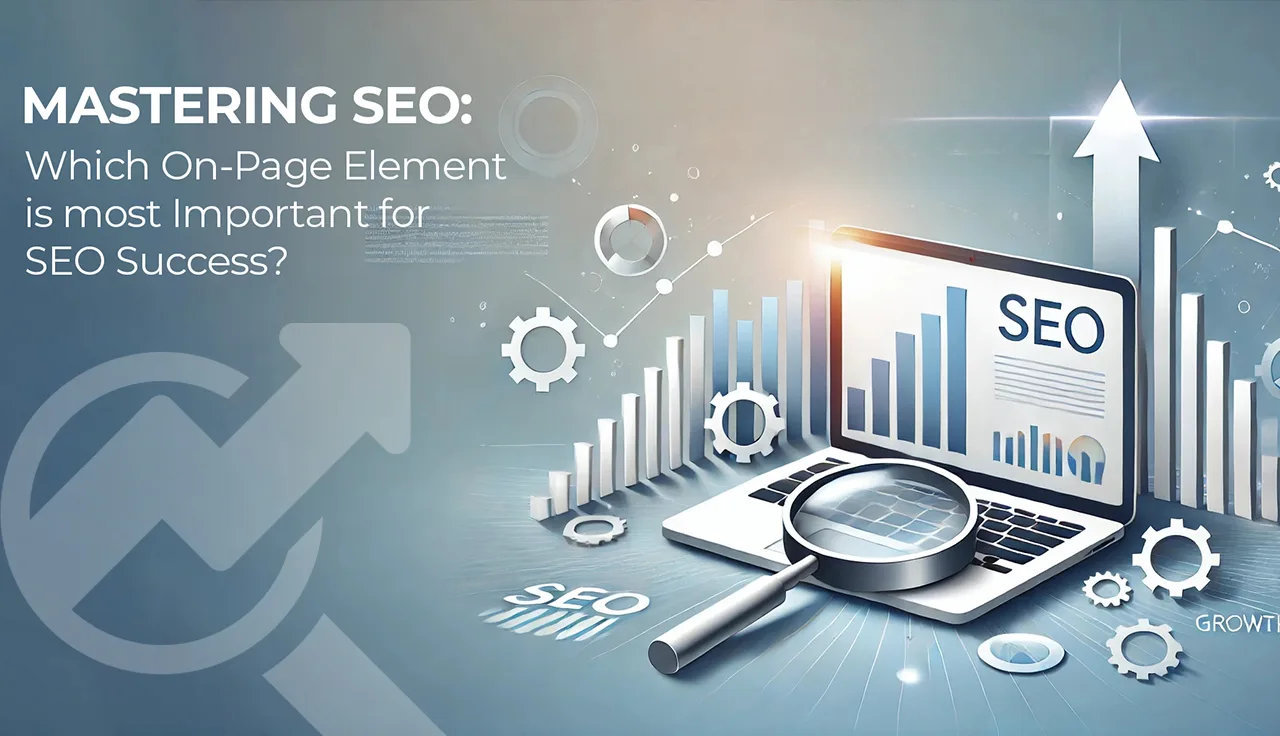
Which On-Page Element Is Most Important for SEO Success?

By Suraj Pandey

11 December 2024

Updated Date: 19 August 2026

Which On-Page Element Is Most Important for SEO Success?


When it comes to SEO, there's no shortage of tactics to implement. From keyword research to link building, the list can feel overwhelming. But here's the truth: if you had to prioritize just one on-page element for SEO success, the title tag would be it.

While Google's ranking algorithm considers over 200 factors, the meta title (HTML title tag) remains one of the most important on-page SEO elements you can optimize. Why? Because it serves triple duty: it signals relevance to search engines, attracts clicks from searchers and impacts your CTR (click-through rate), which is a confirmed ranking factor.

In this guide, we'll break down why title tags dominate the on-page SEO landscape, explore other critical on-page elements and show you exactly how to optimize each one for maximum SERP visibility.


The Most Important On-Page Element along with other SEO Elements 

1. Meta Titles

Your meta title (the text that appears in browser tabs and search results) is the first impression you make on both search engines and users. They're essential for: 

  • Targeting the primary keyword and clearly indicating page relevance

  • Improving click-through rates by making the title compelling

  • Helping search engines understand your page topic

  • Creating a clear first impression in search results

Optimization tip: Keep your title within 50-60 characters, place the primary keyword naturally near the beginning and make it descriptive and compelling.


2. Meta Descriptions (155-160 Characters)

Although meta descriptions don't directly factor into Google's ranking algorithm, they're still essential for:

  • Improving click-through rates (if they're compelling)

  • Summarizing your page value proposition

  • Including a secondary keyword when natural

Optimization tip: Make your description action-oriented and include the primary keyword.


3. H1 Tags (One Per Page)

H1 Tags

Your H1 is your page's main headline and serves as the content's anchor.

  • Use only one H1 per page

  • Make it keyword-relevant and descriptive

  • Ensure it matches or closely aligns with your title tag

  • Front-load your primary keyword when possible

Why it matters: Search engines use H1 tags to understand your page's main topic.


4. Header Hierarchy (H2s, H3s, H4s)

Proper header structure helps search engines understand your content organization and improves user experience.

  • Use H2s for main sections

  • Use H3s for subsections

  • Maintain logical hierarchy

  • Include related keywords naturally in subheadings


5. Keyword Optimization in Body Content

Google needs to see your target keyword and related variations throughout your content.

Best practices:

  • Primary keyword in the first 100 words

  • Natural keyword density (2-3% for primary keyword)

  • Include semantic variations and LSI keywords

  • Use keywords in the first sentence of paragraphs when relevant


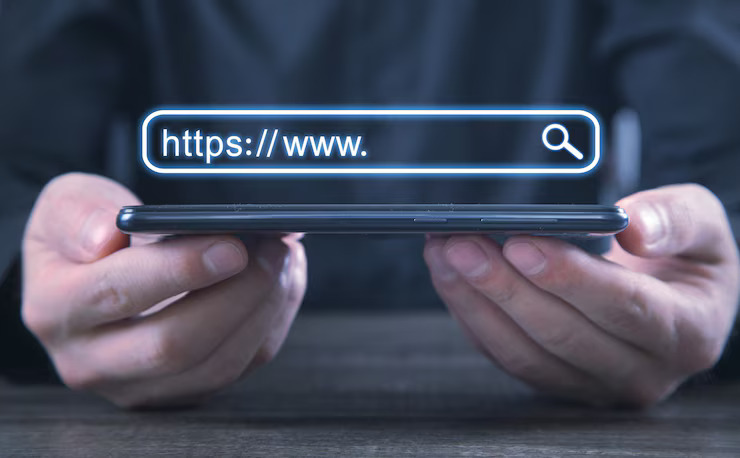
6. URL Structure

URL Structure

Your URL should be clean, descriptive and keyword-inclusive.

Optimal structure:

  • Keep URLs under 75 characters

  • Use hyphens to separate words

  • Include your primary keyword

  • Remove stop words when possible

  • Use lowercase letters

Example: www.site.com/seo-title-tags-guide (not /p=12345)


7. Internal Linking Strategy

Internal links guide search engines through your site while distributing page authority.

  • Link to related content using keyword-rich anchor text

  • Use descriptive anchor text (avoid "click here")

  • Establish information hierarchy through linking

  • Typically 3-5 internal links per 1,000 words

Why it matters: Internal links help establish topical relevance and improve crawlability.


8. Image Optimization (Alt Text)

Images improve user experience and create SEO opportunities.

Optimize images by:

  • Adding descriptive alt text including relevant keywords

  • Using descriptive file names (not "image1.jpg")

  • Compressing images for page speed

  • Using appropriate image formats (WebP, JPEG, PNG)


9. Meta Robots & Structured Data (Schema Markup)

  • Meta robots: Control indexing with <meta name="robots" content="index, follow">

  • Schema markup: Help Google understand your content with structured data (article, FAQ, rating, etc.)

  • Rich snippets: Schema markup can create enhanced SERP features (star ratings, featured snippets)


How These Elements Work Together

Here's the truth: while the title tag is the most important single element, on-page SEO success requires optimization across all these elements working in harmony.

Think of it like this:

  • Title tag = Your page's main promise

  • H1 = Your page's main topic

  • Content & keywords = The proof

  • Internal links = The navigation

  • Meta description = Your sales pitch

All eight elements must align and reinforce each other to maximize your ranking potential.


Common On-Page SEO Mistakes to Avoid

Don't let these errors sabotage your rankings:

1. Keyword Stuffing: Overusing keywords damages readability and triggers spam filters.

2. Duplicate Title Tags & Meta Descriptions:Every page needs unique metadata.

3. Thin Content: Pages under 300 words rarely rank for competitive keywords.

4. Missing Internal Links: Neglecting internal linking leaves ranking potential on the table.

5. Poor URL Structure: Messy URLs confuse both users and search engines.

6. Ignoring Mobile Optimization: Over 60% of searches are mobile, your page must perform flawlessly on mobile devices.

7. Slow Page Speed: Page speed is a direct ranking factor and affects user experience dramatically.

8. No Structured Data: Schema markup provides ranking opportunities through rich snippets.


Conclusion

On-page SEO is just the beginning. The most successful SEO strategies combine optimized on-page elements with comprehensive keyword research, quality backlink acquisition and continuous performance monitoring.

Start with your most important pages, optimize their title tags and content structure, then systematically work through your entire site. The compound effect of improved on-page optimization across dozens of pages can dramatically increase your organic traffic.

Your ranking success starts with proper on-page optimization, make every element count.


FAQs

What are SEO on page elements?

SEO on page elements are components of a website that can be directly optimized to improve search engine rankings. These include title tags, meta descriptions, headers, content, URL structure, internal linking, and more.

Why are SEO on page elements important?

SEO on page elements are crucial because they enhance a website's visibility in search engines, improve user experience, and help align content with search intent.

Which on page SEO element is the most important?

Content quality and relevance are considered the most important on page SEO elements, as they directly influence user engagement and search engine rankings.

What are the key on-page SEO elements for better rankings?

Key on-page SEO elements include title tags, meta descriptions, headers, content quality, URL structure, internal linking, mobile-friendliness, and page speed optimization.

How do title tags impact SEO?

Title tags serve as the clickable headline in search engine results, influencing click-through rates and rankings when optimized with keywords like SEO on page elements.

How does an SEO Company in Mumbai help with on page SEO?

An SEO Company in Mumbai provides expertise in optimizing on page elements, ensuring tailored strategies for regional and global audiences.

How can I optimize headers for SEO?

Use a single H1 tag per page, include primary keywords, and structure H2 and H3 headers to reflect secondary keywords like Key On-Page SEO Elements.

What is the impact of mobile-friendliness on SEO?

Mobile-friendliness is vital for SEO as Google prioritizes mobile-first indexing. A responsive design improves usability and search rankings.

What makes an SEO Company in Mumbai different?

An SEO Company in Mumbai offers localized expertise, tailored content strategies, and in-depth market knowledge to help businesses succeed online.

What are common mistakes in on page SEO?

Common mistakes include keyword stuffing, neglecting mobile optimization, poorly structured URLs, and missing alt text for images.

Why is keyword placement important in on page SEO?

Proper keyword placement ensures that search engines and users recognize the relevance of your content. Keywords like SEO on page elements should be naturally incorporated into titles, headers, and body content.

Why is partnering with an SEO Company in Mumbai beneficial for businesses?

An SEO Company in Mumbai offers expertise in optimizing Key On-Page SEO Elements, local SEO strategies, and continuous monitoring to ensure long-term success.

SHARE ON

Author Suraj Pandey

SEO Lead

Suraj Pandey is a seasoned SEO expert with over 4.5 years of experience in digital marketing. He excels in driving website traffic and improving conversion rates, ensuring business growth. Suraj's expertise spans on-page optimization, off-page strategies, technical SEO, and content marketing. His skills in keyword research, competitor analysis, and backlink building have made him a trusted advisor to high-profile clients. With a proven track record, Suraj crafts effective SEO strategies that deliver measurable results.

Hello!

We'd love to show you how you can get more traffic and leads

WhatsApp us