Delhi NCR · Institutions, associations & education
Best Ruby on Rails development company in New Delhi
Ruby on Rails applications for universities, edtech platforms, associations, NGOs and membership bodies in Delhi NCR: approval and tender workflows, document control with audit trails, and accessibility planned from the first wireframe.
Our head office is in Navi Mumbai and we have a team in New Delhi.
Read more
Discovery workshops and stakeholder reviews can be held at your premises in Delhi NCR or online, as agreed in the proposal.
- 7+Years in digital marketing
- 120+Brands served
- 55+Team members
- 250+Projects delivered
- 100+Certifications held
Why The Adroit
Accessibility planned from the first wireframe
We use WCAG 2.x success criteria, aiming at level AA, as the working target. That is a design and testing approach, not a compliance claim.
Segregation of duty enforced in code
The person who submits cannot approve, an administrator cannot approve their own request, delegation has a start and an end date, and a change of role is itself an audited event.
Audit trails written for reviewers
The log is append-only from the application, can be exported, and is designed for a reviewer to read rather than for a developer to debug.
Workshops at your premises or online
Discovery workshops and stakeholder reviews can be held at your premises in Delhi NCR or online, as agreed in the proposal.
The upkeep routine is written down
We write the routine down in the handover runbook so it survives changes of staff on either side.
No guessed figures
We quote after discovery, once the roles, stages, integrations and data volume are known, and we do not publish figures that would be guesses.
What NCR organisations ask for
Admissions and enrolment portals
Application, document verification, fee payment and merit or waiting lists for colleges and training institutes.
Edtech learning platforms
Courses, cohorts, assessments, certificates and learner dashboards, with accessible content players.
Membership and renewal systems
Join, renew, pay and download a membership card, with tiers, directories and members-only documents.
Grant and field-report portals
Applications, milestone reports, fund tracking and donor receipts for NGOs and foundations.
Tender and approval workflows
Publication, bid receipt, evaluation sheets and an award record with a complete audit trail.
Document and circular control
Versioned policies and notices with approvals, read receipts and search.
How we work
Six stages, shown here in four groups, each ending in something you can read or test. Timelines depend on scope, approvals on your side and third-party onboarding.
Discovery and workflow design
Interviews with the people who use, approve and audit the system, and a review of any tender or policy document. Role matrix, status rules, data model and integration list are agreed before screens are drawn.
Accessible design
Wireframes and a component set with keyboard use built in, delivered as a clickable prototype.
Build in increments, then test
Rails build with automated tests, demonstrated to your reviewers at the end of each increment. Accessibility and security checks, a content pass and acceptance testing with your reviewers.
Launch and handover
Deployment, training material, documentation and a maintenance plan. A monthly report is shared while the project runs.
A team in New Delhi, a head office in Navi Mumbai
The New Delhi team serves organisations in Delhi, Gurugram, Noida, Faridabad and Ghaziabad.
Planning, build and support sit with one connected team, backed by the head office in Navi Mumbai, so a stakeholder review in Delhi and a deployment run from Navi Mumbai belong to the same project.
Awards and Recognition





In short
A Ruby on Rails development company in New Delhi builds database-backed web applications on a supported Rails 8.x release (the Rails maintenance policy at rubyonrails.org/maintenance lists which series are current). The Adroit has a team in New Delhi and its head office in Navi Mumbai. We build portals for education, associations, NGOs and membership bodies, with role-based access, approval and tender workflows, document control and audit trails. Cost is quoted after discovery.
Who we build for
What does a Rails team in New Delhi build for NCR institutions?
Most Rails work we are asked about in Delhi NCR is a set of records moving through rules: an applicant becomes a student, a member renews a membership, a bid is opened by a committee, a circular is acknowledged by every branch. Rails is well suited to that shape of problem.
Its conventions give every screen, model and background job a predictable home. For an institution whose staff and vendors change over the years, that predictability is worth more than cleverness: a new developer, or your own IT team, can find the approval rule or the email template without a guided tour.
This page covers what is specific to buyers in the National Capital Region. For the generic definitions, version lifecycle and cost drivers of Rails work, see our Ruby on Rails development services page. If your estate is on PHP rather than Rails, our PHP development team in New Delhi covers the same buyers.
One team across the NCR
The New Delhi team serves organisations in Delhi, Gurugram, Noida, Faridabad and Ghaziabad. Planning, build and support sit with one connected team, backed by the head office in Navi Mumbai, so a stakeholder review in Delhi and a deployment run from Navi Mumbai belong to the same project.
Alongside the application, the same team can build the public website that sits in front of it.
| Institution | Typical Rails application | What it has to get right |
|---|---|---|
| University or college | Admissions, scholarship and fee portal; faculty and student records; notices in two languages. | Many reviewer roles, document checks, deadline handling and bulk notices to applicants. |
| Edtech platform | Course catalogue, enrolment, assessments, cohort dashboards and certificates. | Content access rules, learner accessibility, busy enrolment windows and clear reporting. |
| NGO or foundation | Grant applications, beneficiary and field-report portals, donor receipts. | Separation between field staff and finance, consent records, forms that tolerate weak connectivity. |
| Trade body or association | Membership, renewals, events, directory and members-only documents. | Renewal cycles, tiered access, payment reconciliation and bulk email. |
| Registration or licensing body | Registration, renewal, inspection records and certificate issue. | A fixed approval route, return-for-correction, and certificates that can be verified. |
| Tender or procurement desk | Tender notices, bid submission, clarification and evaluation sheets. | Closing time enforced by the server, sealed bids until opening, an evaluation record. |
| Internal document control | Policies, circulars and files with approvals and acknowledgements. | Versioning, who has read what, retention rules and search in two languages. |
Tenders, approvals & roles
How does a tender, approval or registration workflow run in Rails?
A workflow is a record with a status and rules about who may move it to the next status. In Rails we hold the allowed moves in one place, such as a state-machine library or a small set of service objects, so the rule is written once and tested once. The five stages below are the common core of an application, registration or approval process.
- Stage 1 · ApplicantSubmitForm and documents are validated, saved as a draft, then submitted with a timestamp.
- Stage 2 · ReviewerReviewChecks completeness, adds remarks, or returns the record with a reason.
- Stage 3 · ApproverApproveApproves or rejects within their authority; larger cases route to a higher role.
- Stage 4 · SystemIssueA background job generates the letter or certificate and sends the notice.
- Stage 5 · AuditorLogEvery move above is written to the audit log and can be exported.
A returned record goes back one stage with the reviewer's remark, and the history stays visible to everyone entitled to see it.
Roles, scopes and segregation of duty
Authorization is written as policy objects: for each kind of record, a small class answers who may view, edit, approve or delete it, and which records appear in each person's list. A branch reviewer's list is scoped to their branch before the page is built, so a record from another branch is never fetched at all.
Rules that matter to auditors are enforced in code, not left to settings: the person who submits cannot approve, an administrator cannot approve their own request, delegation has a start and an end date, and a change of role is itself an audited event. Routine settings such as stage order, limits and notice templates can sit in an admin area for your staff to adjust.
Tenders: what the server must enforce
A tender is a workflow with a clock. The closing time is stored and checked on the server, in IST, so a bid cannot be accepted a second late because a browser clock was wrong. Bid documents can be held encrypted and withheld from evaluators until the opening step is recorded. Evaluators score on their own sheets, and the committee sees the combined result with each member's remarks preserved.
An application like this supports your own tender process. It is not a substitute for any government e-procurement platform where one is mandatory.
What we build
Which Rails solutions do NCR organisations ask for?
Admissions and enrolment portals
Application, document verification, fee payment and merit or waiting lists for colleges and training institutes.
Edtech learning platforms
Courses, cohorts, assessments, certificates and learner dashboards, with accessible content players.
Membership and renewal systems
Join, renew, pay and download a membership card, with tiers, directories and members-only documents.
Grant and field-report portals
Applications, milestone reports, fund tracking and donor receipts for NGOs and foundations.
Tender and approval workflows
Publication, bid receipt, evaluation sheets and an award record with a complete audit trail.
Document and circular control
Versioned policies and notices with approvals, read receipts and search.
Want this for your business? Discuss your portal
Questions
FAQs
Yes. The Adroit has its head office in Navi Mumbai and a team in New Delhi, alongside teams in Mumbai, Bangalore. For Delhi NCR projects the work is planned and delivered by one connected team, and we serve organisations in Delhi, Gurugram, Noida, Faridabad and Ghaziabad. Workshops and reviews can be held at your premises or online, as agreed in the proposal.
Rails suits organisations whose software is mostly records moving through rules: universities and colleges with admissions and fee portals, edtech platforms, NGOs with grant and field-report workflows, associations with membership and renewals, registration bodies, and teams running tender or approval processes. If your need is mainly a brochure website, a content management system is usually the simpler choice, and we will say so.
We use WCAG 2.x success criteria, aiming at level AA, as the working target, and keep the intent of GIGW-style guidance in view for public portals. That means semantic markup, labelled forms, keyboard operation, visible focus, readable contrast and checks on Turbo navigation, rich-text editors and tables. We do not claim compliance or certification. If your tender names a guideline or a third-party audit, tell us at the start; an accredited audit is a separate engagement.
Yes. A workflow is a record with a status and rules about who may move it on. We hold the allowed moves in one place, enforce them on the server, support return-for-correction and time-bound delegation, and log every move. For tenders the closing time is checked on the server in IST and bid documents can be withheld until the opening step is recorded. We implement the rules your office specifies; the application does not replace any mandatory government e-procurement platform.
Roles and scopes are designed together before screens are drawn. Policy objects decide who may view, edit or approve each kind of record, and lists are scoped before they are built, so a branch reviewer never fetches another branch records. The person who submits cannot approve, administrators cannot approve their own requests, and a change of role is an audited event. Sign-in can add lockout and an optional second factor.
Files are attached to records through Active Storage with a checksum, downloaded through routes that check permission first, and replaced as new versions rather than overwritten. Retention rules say how long drafts and superseded versions are kept. An audit trail records the signed-in user, their role, the action, the old and new values and the reason typed, and can be exported for reviewers. The exact fields are agreed in an audit specification.
Hosting is a design decision. We can deploy the application, database and backups to an India region of a cloud provider or to servers you control. Day to day, that means supported Ruby and Rails versions, dependency and code scanning on each release, encrypted credentials, rate limits on sign-in and upload routes, filtered logs, separate low-privilege accounts and a rehearsed restore. For duties under the Digital Personal Data Protection Act, 2023, please check with your compliance counsel.
We build new projects on a supported Rails 8.x release and confirm the current supported series against the Rails maintenance policy at rubyonrails.org/maintenance before starting, because that policy changes over time. Upgrades are planned as scheduled work with automated tests that make the next move predictable, and can be included in a maintenance plan agreed in the proposal. Your own IT team can take over using the runbook we hand over.
More questions (2)
We quote after discovery, because the price depends on what the system must do. The main drivers are the number of roles and status stages, integrations, data migration, depth of accessibility testing, the amount of content to prepare, how PDFs and files are handled, hosting setup and the support plan. We do not publish figures, which would be guesses. You receive a written proposal stating scope, engagement model and what is included.
Yes. We start with a read-only review of the code, the Ruby and Rails versions, the dependency list, the tests and the hosting set-up, then report what is sound, what is risky and what to do first. From there we can stabilise, upgrade in stages or extend the application. If the existing system is on PHP, our PHP team in New Delhi can review that instead, and we will advise honestly if staying on the current stack is the better choice.
Read the full guide
6 sections with the detail behind this page
Read the full guide
6 sections with the detail behind this pageThe detail behind this page, section by section. Open any heading to read it; everything stays on this page.
Which Rails features carry an institutional portal?
Which Rails features carry an institutional portal?
Framework fit
Institutional portals lean on the same few framework features again and again. The table maps each one to the problem it solves, so a reviewer can see why the framework was chosen and where to look in the code.
| Rails feature | What it does for an institution | What we add around it |
|---|---|---|
| Rails I18n | Holds every label, message and email in locale files, with a default locale and fallbacks. | A review pass with your editors, plus tests that fail when a string is missing. |
| Active Storage | Attaches uploaded files to records, keeps a checksum for each, and can store them on local disk or in S3-compatible storage. | Authorised download routes, file-type and size limits, and a virus-scan step where your policy needs one. |
| Action Text | Rich-text fields for circulars, notices and long descriptions, stored with the record. | A keyboard and screen-reader check of the editor, and a plain-text fallback if your users need one. |
| Action Mailer and Active Job | Sends notifications and bulk notices in the background, from templates that can differ by language. | Delivery logs, retry rules and a visible record of which notice went to whom. |
| Active Record migrations and constraints | Versioned database changes, with uniqueness, null and foreign-key rules held in the database itself. | A data dictionary your reviewers can read, and a rehearsed migration before each release. |
| Built-in request protection | CSRF tokens, strong parameters, escaped output by default and filtered parameters in logs. | Content security headers, rate limits on sign-in and upload routes, and a static-analysis pass on each release. |
| Authentication and authorization | Rails provides the building blocks; sign-in and permissions are layered on with established libraries. | A Devise-style sign-in flow with lockout and optional second factor, and policy objects that decide who may act on which record. |
Feature names and defaults change between Rails releases. We confirm them against the Rails Guides (guides.rubyonrails.org) and the maintenance policy at rubyonrails.org/maintenance for the release series chosen for your project.
How is accessibility handled in a Rails interface?
How is accessibility handled in a Rails interface?
Accessibility
We use WCAG 2.x success criteria, aiming at level AA, as the working target, and keep the intent of GIGW-style guidance for public portals in view. That is a design and testing approach, not a compliance claim: an audit by an accredited body is a separate engagement, and we say so in the proposal.
In a Rails application the accessibility work sits in the view layer, the form helpers and the JavaScript that ships by default. Three places repay attention. Rails views are server-rendered, so semantic headings, landmarks and labelled forms are cheap to get right from the start. Turbo, which Rails includes by default, swaps page content without a full reload, so we check that the page title changes, that focus moves sensibly and that updates are announced. And rich-text editors and date pickers are common trouble spots, so we test them with the keyboard and a screen reader before they are accepted.
Tender and approval screens add one more concern: long tables of bids and applications. They need real header cells, sort controls that are buttons rather than clickable text, and a way to reach the next page of results without a mouse.
Checks on every Rails release
- Every form field has a visible label, and errors are linked to the field they describe
- Flash messages are announced, not just shown
- Full keyboard operation with a visible focus ring, including modals and menus
- Page title and focus move correctly after Turbo navigation
- Colour contrast checked for text, buttons, charts and status badges
- Data tables use header cells and captions, not layout tables
- File upload shows progress and result in text
- Rich-text and date fields tested with a screen reader
- Generated PDFs tagged where practical, with a text alternative offered
How are documents, versions and audit trails kept in a Rails portal?
How are documents, versions and audit trails kept in a Rails portal?
Documents & audit
Two different records are easy to confuse. A document history says what a file looked like at each version. An audit trail says who did what, and when. Institutions usually need both, and Rails makes both straightforward when they are designed in early.
Files. Uploads are attached to records through Active Storage, which keeps a checksum for each file. Downloads go through a route that first asks the authorization policy whether this person may see this record, rather than relying on a hard-to-guess address. Links handed out by the storage layer are short-lived by design, so a copied link stops working.
Versions. A replaced file or an edited notice becomes a new version; the old one stays readable to the roles allowed to see history. Retention rules say how long drafts, rejected applications and superseded versions are kept, and what happens afterwards.
Audit trail. A versioning or audit library records the change on the model, and we add the context a reviewer needs: the signed-in user, their role, the screen or job that made the change, and the reason typed in. The log is append-only from the application, can be exported, and is designed for a reviewer to read rather than for a developer to debug.
| Event | What is recorded | Who can see it |
|---|---|---|
| Sign-in and sign-out | User, time, outcome and the network address, with failed attempts counted. | Administrators and auditors. |
| Status change | Old and new status, the person, their role and the remark entered. | Roles with access to that record. |
| File upload or replacement | File name, size, checksum, uploader and the version it supersedes. | Roles with access to that record. |
| Role or permission change | Who changed whose role, from what to what, and any end date. | Auditors only. |
| Export or bulk notice | Who ran it, which filter was used and how many records or recipients were included. | Administrators and auditors. |
For duties under the Digital Personal Data Protection Act, 2023, or sector rules, please check with your compliance counsel. We implement what they specify, such as consent records and retention periods.
What does secure hosting hygiene look like for a Rails application?
What does secure hosting hygiene look like for a Rails application?
Hosting hygiene
Most incidents in long-lived portals come from neglected basics rather than clever attacks: an old Ruby, an unpatched gem, a backup nobody has restored. We write the routine down in the handover runbook so it survives changes of staff on either side.
| Hygiene item | What it means in practice | Evidence you receive |
|---|---|---|
| Runtime and Rails currency | Ruby and Rails are kept on a release series that still receives security fixes, and upgrades are planned work rather than emergencies. | A version list in the runbook, with the maintenance policy it was checked against. |
| Dependency and code scanning | Gems are checked against published advisories and the code is run through a Rails static-analysis tool before each release. | Scan output attached to the release notes. |
| Secrets | Keys and passwords live in encrypted credentials or the host secret store, never in the repository; sensitive fields can be encrypted at the database layer. | A secrets inventory with owners, without the secrets themselves. |
| Sign-in protection | Lockout after repeated failures, rate limits on sign-in and upload routes, secure and same-site cookies, and an optional second factor for officers. | Authentication notes for your IT reviewers. |
| Logs without personal data | Passwords, tokens and chosen personal fields are filtered from application logs, and logs are kept for a period agreed with you. | The filter list and retention setting. |
| Backups and restore | Database and files are backed up in the same India region by agreement, and a restore is rehearsed rather than assumed. | A recovery plan and a restore-test note. |
| Least privilege | Deployment, database and storage access are separate accounts with the minimum rights, and leavers are removed on a schedule. | An access list reviewed with your IT team. |
Patch cadence, backup frequency and log retention are agreed in the proposal and the maintenance plan. We do not quote uptime figures. For the Rails release lifecycle itself, see the Rails services overview and, for upgrade planning across India, our India page.
How does working with the New Delhi team run day to day?
How does working with the New Delhi team run day to day?
Working with us in Delhi
Institutional projects succeed or stall on stakeholder time. A secretary, a registrar or a finance head can rarely give a day to a workshop, so we plan the few meetings that matter and prepare for each so that people arrive to decide, not to be briefed.
The New Delhi team can hold workshops and reviews at your premises in Delhi NCR, and the rest of the project runs online with the wider team in Mumbai, Navi Mumbai, Bangalore. Progress is reported to you in a monthly report, and demonstrations at the end of each build increment let your reviewers see working software rather than slides.
Several people usually need to sign off, so we ask early who they are. The role-matrix review and the first demonstration are where most missing requirements surface, and they are cheap to fix at that point.
What we ask from your side
- A named decision-maker and a deputy who can answer in a day or two
- The tender document, policy or circular the system must follow, if one exists
- Sample forms, certificates and letters in their current format
- Access to the people who will review, approve and audit records
- Credentials for any payment, SMS or document service you already hold
| Touchpoint | Who attends | What comes out of it |
|---|---|---|
| Discovery workshop | Process owners, reviewers, IT and one of our analysts. | Requirements list and a first draft of the role matrix. |
| Role-matrix and workflow review | Approvers, finance and anyone who audits. | Signed-off roles, stages and thresholds. |
| Accessibility and language walkthrough | Content editors and a few representative users. | Findings on keyboard use, screen-reader use and page layout. |
| Increment demonstrations | Stakeholders you choose. | Decisions recorded, scope changes made visible. |
| User acceptance testing | Real reviewers working real sample cases. | A defect list and a go or no-go decision on your side. |
| Training and handover | Administrators, trainers and your IT team. | User guides, an admin guide and the runbook. |
How is a Rails portal delivered for a Delhi organisation, and what changes the cost?
How is a Rails portal delivered for a Delhi organisation, and what changes the cost?
Delivery & cost
Six stages, each ending in something you can read or test. Timelines depend on scope, approvals on your side and third-party onboarding, so we give a phased plan after discovery rather than a number in advance.
- 1DiscoveryInterviews with the people who use, approve and audit the system, and a review of any tender or policy document.Deliverable: requirements list
- 2Roles and workflow designRole matrix, status rules, data model and integration list agreed before screens are drawn.Deliverable: role matrix, workflow diagrams
- 3Accessible designWireframes and a component set with keyboard use and layout checks built in.Deliverable: clickable prototype
- 4Build in incrementsRails build with automated tests, demonstrated to your reviewers at the end of each increment.Deliverable: working builds for review
- 5Testing and reviewAccessibility and security checks, a content pass and acceptance testing with your reviewers.Deliverable: test summary
- 6Launch and handoverDeployment, training material, documentation and a maintenance plan. A monthly report is shared while the project runs.Deliverable: documentation pack, runbook
What changes the cost
The number of roles and status stages, the number of integrations, the volume of data to migrate, the depth of accessibility testing, how much content needs preparing, how files and PDFs are produced, hosting setup and the support plan you choose. We quote after discovery, once these are known, and we do not publish figures that would be guesses.
Engagement models
A fixed-scope project suits a clearly specified portal where a budget needs a defined deliverable. Time-and-material suits staged, multi-department rollouts. A dedicated team suits continuous change over a long period. Terms are set out in the proposal; our India page compares the models in more detail.
Tell us what the system must follow
A named decision-maker and a deputy who can answer in a day or two. The tender document, policy or circular the system must follow, if one exists.
What's More
How Are We Different?
Dedicated Account Manager
SEO Enabled Websites
Responsive Websites
Site Security Upgrades & Maintenance
Website Speed & Performance Optimization
Timely Delivery
Easy to use CMS
Google PSI Score Above 80
Maximum 12 Hours TAT
Secured & Optimised Website Delivery
15 Days Cooling Period
Your Success, Our Reputation
120+ brands have trusted us with their marketing and websites over 7+ years.
Here are some of the clients we have worked with.















































































Latest and Greatest Posts
The Adroit Reviews
Rated 5.0 from 19 client reviews on Clutch. Read our Clutch profile
Get in Touch
Work That Works
A selection of recent campaigns, websites, reels and emailers delivered for our clients.
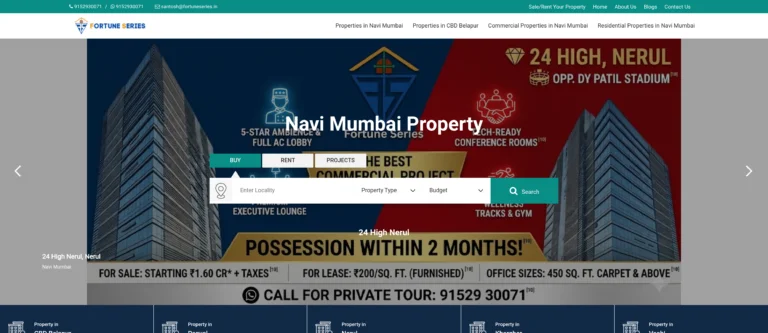 Fortune Series – Website
 Pronoesis – Website
 Texas Spine and Pain – Website
 Mindvein – Website
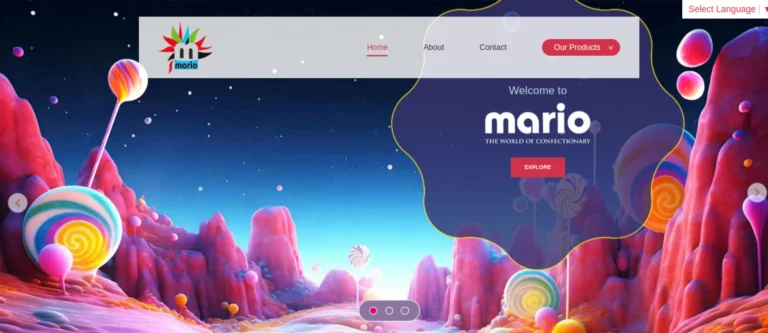 Mario Products – Website
 Spectrum Filtration – Website
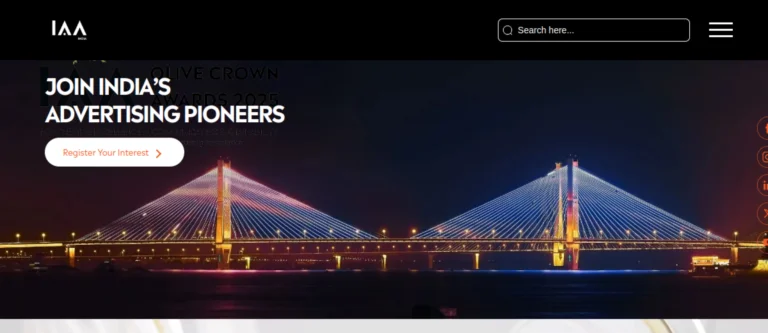 IAA India Chapter – Website
 The Premium Basket – Website
 Lamar World – Website
 Spring Galaxy – Website
 Excel Wallpapers – Website
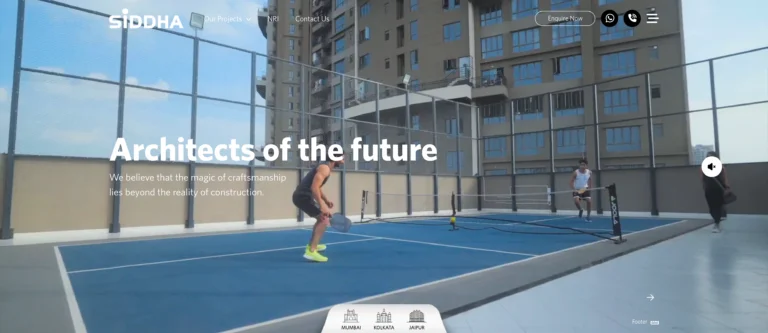 Siddha Group – Website
Related work from our portfolio: