Rails 8.x engineering, convention first
Ruby on Rails Development Servicesfor products that need to ship, then keep shipping
Ruby on Rails development services cover the full life of an application built on Rails: discovery and data modelling, SaaS and web application builds, APIs and integrations, background processing, upgrades from old Rails versions, performance and security work, and long-term support.
Read more
Read it as a buyer’s guide: what Rails is, what the Rails 8.x stack gives you out of the box, how version support works, when Rails beats Laravel, Django or Node.js, what moves the price, and how we run a project.
- 7+Years in digital marketing
- 120+Brands served
- 55+Team members
- 250+Projects delivered
- 100+Certifications held
Why The Adroit
Fewer moving parts on Rails 8.x
Recent Rails releases reduced the number of extra services a new application needs. Most teams can start with one database and one deploy target and add Redis or Elasticsearch only when measurements justify them.
Tests and review before every merge
Tests, RuboCop and Brakeman run on every pull request, with a dependency audit on a schedule and code review before merge.
Upgrades one release series at a time
The safest upgrade path is one minor Rails version at a time, clearing deprecation warnings at each stop, rather than a jump from Rails 5 straight to 8.
Security as discipline, not a claim
Brakeman static analysis runs on every pull request, and bundler-audit flags gems with published advisories. It is engineering practice, not a certification claim.
We say when another stack suits better
We confirm the choice during discovery and will tell you if another stack suits better.
Quoted after discovery, reported monthly
Cost depends on scope, not on the language, so we quote after discovery and publish no rates. Updates, fixes and new features continue with a monthly report.
What we do
Nine kinds of work cover almost every Rails engagement; six are shown here.
Custom web application development
Applications shaped around your roles, approvals and reporting, from a first usable release to full production scale.
All nine servicesSaaS product development
Subscription products with accounts, plans, usage limits, invoicing hooks and onboarding, designed so a second and a hundredth customer cost the same effort.
Where Rails fitsAPI development and integrations
Versioned JSON APIs for mobile apps and partners, plus connections to payment gateways, ERP, accounting, messaging and shipping services.
ArchitectureHotwire and modern front ends
Fast, app-like screens with Turbo and Stimulus and very little custom JavaScript, or a Rails API behind a React or Vue front end when your team prefers it.
The Rails 8.x stackRails version upgrades and legacy rescue
Applications on Rails 4, 5, 6 or early 7 moved to a supported release in controlled steps, with tests added first.
Version supportPerformance and security hardening
Query tuning, caching, job queues, dependency audits and static analysis for applications that slowed down or began to worry someone.
Scaling Rails
How we work
Seven stages, each ending in something you can review, shown here in four groups. Dates and effort are set in the proposal after discovery, not promised here.
Discovery and domain modelling
We interview stakeholders, map users, rules and integrations, and rank features by value and risk. We draw the entities, relationships and states, and test them against real scenarios before any code exists.
Architecture and plan
We fix the Rails and Ruby versions, hosting, integrations, tenancy and release plan, and cut scope into increments.
Build, test and harden
Short iterations with working software on a staging site and a demo at the end of each. Automated suites, security scans, performance checks on the main flows and data-migration rehearsals.
Deploy, hand over and run
Production release with monitoring, backups and documentation, so the system does not depend on any one person. Updates, fixes and new features continue under a support or retainer arrangement, with a monthly report.
Ruby on Rails development by location
Our head office is in Navi Mumbai, with teams in Mumbai, Bangalore, Delhi. We work with clients across India and remotely with those abroad.
Pick the page closest to your situation. Looking for engineers rather than a project team? See Hire Ruby on Rails developers.
Awards and Recognition





Ruby on Rails development services are the design, build, upgrade and support of web applications, SaaS products and APIs written with Ruby on Rails, the open-source full-stack framework first released in 2004 that favours convention over configuration. Rails suits products with a rich data model, user accounts, workflows and a long roadmap. The Adroit builds on current Rails 8.x with PostgreSQL, Hotwire and background jobs. Head office is in Navi Mumbai, with teams in Mumbai, Bangalore, Delhi.
What do Ruby on Rails development services include?
Nine kinds of work cover almost every Rails engagement, and real projects combine two or three of them. If you only need people to join your own team, see Hire Ruby on Rails developers; the wider site context sits in our web development services.
Custom web application development
Applications shaped around your roles, approvals and reporting, from a first usable release to full production scale.
Typical deliverables: Domain model, role matrix, admin area, audit trail
SaaS product development
Subscription products with accounts, plans, usage limits, invoicing hooks and onboarding, designed so a second and a hundredth customer cost the same effort.
Typical deliverables: Tenancy design, billing integration, usage tracking
MVP and prototype builds
A narrow, working first version used to test demand, built on the same foundations as the full product so nothing is thrown away.
Typical deliverables: Scoped feature list, live release, feedback backlog
CRM, HRMS and back-office systems
Sales pipelines, employee records, leave and approvals, inventory and operations tools that replace spreadsheets and email threads.
Typical deliverables: Workflows, reports, import and export tools
API development and integrations
Versioned JSON APIs for mobile apps and partners, plus connections to payment gateways, ERP, accounting, messaging and shipping services.
Typical deliverables: API contract, authentication scheme, retry rules
Hotwire and modern front ends
Fast, app-like screens with Turbo and Stimulus and very little custom JavaScript, or a Rails API behind a React or Vue front end when your team prefers it.
Typical deliverables: Component library, responsive screens
Rails version upgrades and legacy rescue
Applications on Rails 4, 5, 6 or early 7 moved to a supported release in controlled steps, with tests added first. See version support.
Typical deliverables: Audit report, upgrade path, test safety net
Performance and security hardening
Query tuning, caching, job queues, dependency audits and static analysis for applications that slowed down or began to worry someone.
Typical deliverables: Findings report, fixes, before and after measurements
Maintenance and support
Gem and Rails updates, patching, monitoring, fixes and small enhancements, summarised in a monthly report.
Typical deliverables: Update log, monthly report, backlog
What kinds of software is Ruby on Rails best for?
Rails is strongest where the product is a set of records, rules and workflows that will keep changing: the more your software looks like “users, accounts, objects and the things they do to them”, the more Rails saves.
| Product type | Why Rails fits | Watch for |
|---|---|---|
| SaaS products | Accounts, plans, permissions, emails and admin tooling are solved patterns, so build time goes into the unique part of the product. | Decide the tenancy model early; it is expensive to change late. |
| Marketplaces and platforms | Two-sided data models, search, messaging, payouts and moderation queues map cleanly onto Active Record and jobs. | Payment flows need careful state handling and reconciliation. |
| CRM, HRMS and ERP-style tools | Forms, validations, approvals, audit history and reports are the framework’s home ground. | Reporting-heavy screens need indexes and read-optimised queries. |
| Internal tools and admin portals | A working, secure back-office can be assembled in weeks and extended safely afterwards. | Keep roles and permissions explicit from the first sprint. |
| E-commerce and subscriptions | Catalogue, cart, orders and recurring billing are well understood; open-source Rails commerce engines exist. | For a plain store, a hosted platform may be cheaper than custom code. |
| API backends for mobile apps | API mode returns JSON with authentication, versioning and rate limiting, sharing business rules with the web app. | Document the contract and version it before the first public release. |
| Content and community sites | Rich text, uploads, comments and notifications are built into the framework. | Editor-run sites with little custom logic may suit a CMS better. |
Rails is a weaker fit for CPU-bound number crunching, machine-learning-centred products and very high-frequency real-time systems; those parts are better as separate services. See Rails vs other frameworks. Industry and city detail lives on our location pages below.
Not sure what version your app runs?
Send us the Gemfile.lock and we will tell you where you stand and what the upgrade path looks like.
How does a Ruby on Rails project run with The Adroit?
Seven stages, each ending in something you can review. Dates and effort are set in the proposal after discovery, not promised here.
Discovery
We interview stakeholders, map users, rules and integrations, and rank features by value and risk.
You receive: Scope outline, risk list, open questions
Domain modelling
We draw the entities, relationships and states, and test them against real scenarios before any code exists.
You receive: Data model, role matrix
Architecture and plan
We fix the Rails and Ruby versions, hosting, integrations, tenancy and release plan, and cut scope into increments.
You receive: Architecture note, phased plan, proposal
Iterative build
Short iterations with working software on a staging site and a demo at the end of each.
You receive: Demos, staging access, changelog
Test and harden
Automated suites, security scans, performance checks on the main flows and data-migration rehearsals.
You receive: Test report, scan results
Deploy and hand over
Production release with monitoring, backups and documentation, so the system does not depend on any one person.
You receive: Live system, runbook, source access
Run and improve
Updates, fixes and new features continue under a support or retainer arrangement, with a monthly report.
You receive: Monthly report, updated backlog
Want this for your business? Request a Rails health check
Questions
FAQs
Ruby on Rails development services are the planning, building, upgrading and support of web software written with the Ruby on Rails framework. They include custom web applications, SaaS products, MVPs, CRM and HRMS systems, JSON APIs and integrations, Hotwire front ends, Rails version upgrades, performance and security work, and maintenance. The Adroit delivers them on current Rails 8.x, with a head office in Navi Mumbai and teams in Mumbai, Bangalore, Delhi.
Yes, for products built around accounts, data and workflows, such as SaaS, marketplaces, internal tools and back-office systems. Rails 8 reduced moving parts by adding database-backed job, cache and websocket libraries and a built-in deployment tool, and the framework has a long record of backward-compatible upgrades. It is a weaker fit for machine-learning-centred, CPU-bound or extremely real-time products, which are better handled by separate services.
Start on the current Rails 8.x series with a Ruby release that is still in maintenance; Rails 8.0 needs Ruby 3.2 or newer. Support windows change with each release, so check rubyonrails.org/maintenance for the Rails series currently supported and ruby-lang.org for Ruby branches before you decide. We pin versions at project start and track security releases afterwards.
Choose Rails when you are building a data-rich product that will evolve for years and you value strong conventions, built-in tooling and quick iteration. Laravel is a close alternative if your team or hosting is PHP-based, Django if Python and data science are central, and Node.js if the product is real-time first or the team only writes JavaScript. The comparison table on this page sets out each, and we will say so in discovery if another stack fits you better.
SaaS platforms, marketplaces, CRM and HRMS systems, internal tools, admin portals, subscription and commerce back ends, API backends for mobile apps, and content or community platforms. The common thread is a rich data model with users, permissions and workflows. A simple brochure site, or an editor-run site with little custom logic, is usually better served by a CMS.
Cost depends on scope rather than on the framework, so we quote after discovery and do not publish rates. The main drivers are requirement clarity, roles and workflows, number and quality of integrations, data migration, design depth, security and compliance needs, scale expectations and the support you want after launch. The cost table on this page shows what to settle early to keep the estimate tight.
It depends on scope, content readiness and how quickly feedback arrives, so we set the plan in the proposal after discovery instead of quoting a generic figure. A focused first release is usually much quicker than a full platform, which is why we recommend phasing: launch a narrow, working version, learn from real use, then fund the next phase.
Yes. We audit the application first, add tests around the critical flows, then upgrade one minor Rails version at a time, clearing deprecation warnings at each stop and moving Ruby alongside. Older apps often need extra work on asset tooling and abandoned gems. We recommend a rewrite only when the data model or code cannot be salvaged, and then in slices rather than in one cut-over.
More questions (6)
Rails ships with protections for common attacks switched on by default, including CSRF tokens, output escaping, parameterised queries and strong parameters. Security then depends on keeping the framework patched and on application-level choices such as authorisation. We run Brakeman and bundler-audit in CI, test permissions, protect secrets and track Rails and Ruby security releases. This is engineering practice, not a certification claim.
Yes, when the application is built for it. Rails requests are stateless, so you scale out by adding application servers behind a load balancer. The usual bottlenecks are N+1 queries, missing indexes, slow work inside web requests and absent caching, all of which are fixable. We profile first, then apply indexing, caching, background jobs, read replicas and a CDN as the measurements justify.
Yes. We begin with a code and infrastructure review covering the Rails and Ruby versions, gems, test coverage, hosting and known defects, then report what is healthy, risky and first to fix. Maintenance covers gem and framework updates, patching, monitoring and fixes, with a monthly report. Where tests are missing, adding them around critical flows comes first.
Use fixed scope when requirements are clear and a budget depends on one number. Use time and material when the product is still evolving. Use a dedicated team when you have a long backlog and want continuity. If you already have a team and need extra Rails capacity, our Hire Ruby on Rails Developers service fits. If scope is uncertain but finance wants a ceiling, start with a capped first phase. Terms are agreed in the proposal.
Yes. Rails API mode gives versioned JSON endpoints with token-based authentication, rate limiting and a written contract, and the same business rules can serve a web app and a mobile app. We can pair it with React, Vue or a mobile client, or keep the front end in Rails using Hotwire when a separate front end is not needed.
Our head office is in Navi Mumbai, with teams in Mumbai, Bangalore, Delhi, and each has its own page on this site. We work with clients in any Indian city and overseas remotely. Projects run through discovery, demos at the end of each iteration and, once live, a monthly report.
Read the full guide
10 sections with the detail behind this page
Read the full guide
10 sections with the detail behind this pageThe detail behind this page, section by section. Open any heading to read it; everything stays on this page.
What is Ruby on Rails, and why do teams still choose it?
What is Ruby on Rails, and why do teams still choose it?
Ruby on Rails (also called Rails or RoR) is a full-stack web framework written in the Ruby language. It supplies a ready-made structure for the database layer, request routing, page rendering, background jobs, email, file uploads and testing, so a team spends its time on the product instead of on plumbing.
The two ideas behind it
Convention over configuration. Rails assumes sensible defaults for names, folders and database mappings. A model called Invoice maps to an invoices table without a line of setup. Any Rails developer can open a Rails codebase and know where things live, which is the main reason hand-overs between teams go well.
Don’t repeat yourself. Each rule is written once. A validation on the model protects the form, the API and the console alike, so behaviour does not drift between screens.
How a request moves through Rails
Rails follows the model-view-controller pattern. The router picks a controller, the controller asks models (Active Record) for data, a view or JSON serializer shapes the response, and slow work is handed to a background job. The diagram shows the path.
What does the Rails 8.x stack give you out of the box?
What does the Rails 8.x stack give you out of the box?
Recent Rails releases reduced the number of extra services a new application needs. The “Solid” libraries keep job queues, caching and websockets in the database by default, and Kamal deploys containers to your own servers. Most teams can start with one database and one deploy target and add Redis or Elasticsearch only when measurements justify them.
| Component | Job | How we use it |
|---|---|---|
| Active Record | Maps tables to Ruby objects, with validations, associations and migrations. | Schema design, constraints and indexes first; callbacks kept thin. |
| Hotwire (Turbo + Stimulus) | Updates pages in place from server-rendered HTML with little JavaScript. | Default for dashboards and forms; React or Vue only where needed. |
| Active Job + Solid Queue | Runs email, imports, reports and API calls outside the web request. | Retries and alerts on every job; Sidekiq where throughput demands it. |
| Solid Cache | Application caching backed by the database. | Fragment and query caching after profiling, not before. |
| Action Cable + Solid Cable | WebSocket channels for live updates and notifications. | Live status, notifications and chat-style features. |
| Active Storage | File uploads to disk or cloud storage with variants. | Private buckets, size and type limits, virus scanning where required. |
| Action Mailer | Transactional email from templates. | Queued sending with delivery-failure handling. |
| Authentication generator | Built-in starting point for sessions and password resets. | Base for simple apps; Devise or SSO when the project needs more. |
| Kamal + Thruster | Container deployment and an HTTP front for the app server. | Zero-downtime deploys to cloud or your servers. |
| Minitest or RSpec | Unit, integration and system tests. | Tests around money, permissions and integrations first. |
- PostgreSQL
- Redis (when needed)
- Sidekiq
- Devise
- Pundit
- Stripe and Razorpay SDKs
- Brakeman
- bundler-audit
- RuboCop
- GitHub Actions
- Docker
Defaults differ between Rails 8.0 and later 8.x releases; the project’s Gemfile.lock and the Rails release notes are the source of truth for any given build.
Which Rails and Ruby versions should a project use?
Which Rails and Ruby versions should a project use?
New applications should start on the current Rails 8.x series with a Ruby release that is still receiving maintenance. Rails 8.0 requires Ruby 3.2 or newer. Support windows change with each release, so do not rely on a blog post, including this one, for exact dates: check rubyonrails.org/maintenance for the Rails series currently supported and ruby-lang.org for Ruby branches.
How Rails support works
The Rails team publishes a maintenance policy. In general, the newest release series receives bug fixes and security fixes, the previous series receives security fixes, and the one before that receives only fixes for severe vulnerabilities. Anything older gets nothing, which means a known vulnerability stays open on your server.
Ruby is released each December and each branch gets a limited maintenance period, then a shorter security-only period. A Rails upgrade often has to move Ruby at the same time.
The safest upgrade path is one minor Rails version at a time, clearing deprecation warnings at each stop, rather than a jump from Rails 5 straight to 8.
Practice recommended by the Rails upgrade guide
| If you run | Status | What we recommend |
|---|---|---|
| Rails 8.x | Current line | Build here. Track the latest 8.x patch release and keep gems current. |
| Rails 7.x | Check the maintenance page | Plan the move to 8.x. Later 7.x lines are close to or past their security window; confirm yours. |
| Rails 6.x | Generally unsupported | Upgrade through 7.x. Add tests and clear deprecations first; Webpacker to modern asset tooling is a common task. |
| Rails 5.x or older | Long unsupported | Audit first. Either upgrade stepwise or, when data and logic are tangled beyond rescue, rewrite in slices. |
Status shown is guidance. Always confirm against rubyonrails.org/maintenance on the day you decide.
- Newest seriesBug fixes and security fixes. Where new builds start.
- Previous seriesSecurity fixes only. Time to schedule the upgrade.
- Older seriesSevere security fixes only. Upgrade urgently.
- UnsupportedNo fixes at all. Known flaws stay open.
How do we structure a Rails application so it stays maintainable?
How do we structure a Rails application so it stays maintainable?
Most Rails problems that appear in year three were decided in month one. These are the structural choices we make explicit during design.
Majestic monolith first
One deployable application with clear internal modules is easier to build, test and run than microservices. We split out a service only when load or team boundaries demand it.
Thin controllers, plain objects
Business rules move into service, query and form objects so they are testable without a browser, and callbacks stay out of critical paths.
Engines for bounded areas
Billing, admin or reporting can live in Rails engines, giving a codebase seams to cut along later.
Multi-tenancy by design
Row-level scoping, schema-per-tenant or database-per-tenant are chosen against your data isolation and scale needs, then enforced in code and tests.
API mode and versioning
Where mobile apps or partners consume the system, a versioned JSON API with a written contract sits beside or instead of server-rendered pages.
Jobs, events and idempotency
Every background job can run twice safely. Webhooks and payment callbacks are recorded before they are processed.
How secure is Ruby on Rails, and how do we keep it that way?
How secure is Ruby on Rails, and how do we keep it that way?
Rails ships with defences against common web attacks switched on: cross-site request forgery tokens, output escaping in views, parameterised queries in Active Record, strong parameters, encrypted credentials and signed cookies. These defaults only protect you while they stay on and the framework stays patched, so security is mostly discipline.
Our checklist maps the OWASP Top 10 risk areas to concrete controls. It is engineering practice, not a certification claim.
- Scan the code. Brakeman static analysis runs on every pull request.
- Scan the dependencies. bundler-audit flags gems with published advisories.
- Authorise every route. Policies are tested, not assumed.
- Protect data. Encrypted credentials, filtered logs, private file storage and encrypted attributes for sensitive fields.
- Patch on a schedule. Rails and Ruby security releases are tracked and applied.
Related reading: Ways companies can use Ruby on Rails for cybersecurity.
Is Ruby on Rails fast enough, and how do we scale it?
Is Ruby on Rails fast enough, and how do we scale it?
Rails is fast enough for the large majority of business products. When a Rails page is slow, the cause is nearly always the database or the work done inside the request, not the language. We measure first, then fix in this order.
Remove N+1 queries
Eager loading and counter caches cut hundreds of queries per page to a handful. Tools such as Bullet catch them in development.
Index and shape the data
Indexes for real query patterns, pagination everywhere, and read-optimised queries for reports.
Move work to jobs
Email, PDF generation, imports and API calls leave the web request and run on the queue.
Cache what is stable
Fragment, query and HTTP caching, plus a CDN for assets, once profiling shows where it pays.
Scale out
Rails is stateless per request, so you add app servers behind a load balancer, then read replicas and connection pooling as needed.
Watch it live
Error tracking, slow-query logs and application performance monitoring so regressions are found by us, not by users.
More detail: speeding up a Ruby on Rails application. Load-test results depend on your data and hosting, so we quote none here.
How do we test and ship Rails code?
How do we test and ship Rails code?
Rails has a strong testing culture, and we use it. Tests are the reason a Rails upgrade or a new feature in year three is a routine task instead of a risk.
Test layers
- Model and service tests for rules
- Request tests for APIs and permissions
- System tests for the main user journeys
- Contract tests for third-party calls
Continuous integration
- Tests, RuboCop and Brakeman on every pull request
- Dependency audit on a schedule
- Code review before merge
- Seed data for repeatable demos
Deployment
- Containerised builds
- Staging that mirrors production
- Zero-downtime deploys with Kamal or your pipeline
- Reversible database migrations
- Pull requestTests, RuboCop, Brakeman
- Code reviewBefore merge
- StagingMirrors production
- ProductionZero-downtime deploy
Related reading: test-driven development with Ruby on Rails.
Ruby on Rails vs Laravel, Django, Node.js and others: which should you choose?
Ruby on Rails vs Laravel, Django, Node.js and others: which should you choose?
All of these can build a good product. The decision usually turns on team skills, the shape of the product and what you will maintain for years. Use the table as a starting point; we confirm the choice during discovery and will tell you if another stack suits better.
| Framework | Strong at | Choose it when | Think twice when |
|---|---|---|---|
| Ruby on Rails | Fast delivery of data-rich products with consistent structure. | You are building a SaaS, marketplace or workflow product that will evolve for years. | Your team knows no Ruby and the project is a small brochure site. |
| Laravel (PHP) | Similar productivity, huge hosting and talent pool. | Your team or infrastructure is PHP-based. See our PHP development services. | You want Rails’ built-in conventions across the whole stack. |
| Django (Python) | Batteries included, with Python’s data and ML ecosystem close by. | The product leans on data science or your team is Python-first. | You want less configuration and more convention. |
| Node.js (Express, NestJS) | Real-time features and one language across front and back end. | The product is real-time first or the team is JavaScript-only. | You would assemble many libraries that Rails already bundles. |
| Spring Boot (Java) | Large enterprise systems, strict typing, mature tooling. | The organisation standardises on the JVM. | Speed to first release matters most. |
| ASP.NET Core (C#) | Microsoft-centric enterprises, strong performance and tooling. | You run on Azure and Windows-integrated systems. | You want an open-source stack with lighter hosting. |
For a longer argument, read why Ruby on Rails is a strong choice for web development.
What affects the cost of Ruby on Rails development, and how can you engage us?
What affects the cost of Ruby on Rails development, and how can you engage us?
Cost depends on scope, not on the language, so we quote after discovery and publish no rates. These are the factors that move the number, and what to settle early to keep it down.
| Driver | Why it moves effort | Settle early |
|---|---|---|
| Requirement clarity | Vague scope causes rework in every later stage. | A ranked feature list with acceptance criteria. |
| Roles and workflows | Each role and approval path adds rules and tests. | Who can see and do what. |
| Integrations | Every third-party system brings its own quirks, sandboxes and failure modes. | The list of systems and who owns their access. |
| Data migration | Old data is rarely clean and needs mapping and rehearsal. | Source formats and a data owner. |
| Design depth | Custom interfaces and animation take more than a clean standard UI. | Whether a design system exists. |
| Security and compliance | Audit trails, encryption and reviews add build and test work. | Applicable rules and customer questionnaires. |
| Scale expectations | High volume needs caching, replicas and load testing. | Expected users and peak events. |
| Post-launch support | Updates and fixes are an ongoing cost, not a one-off. | Support hours and response expectations. |
| Model | Best when | Trade-off |
|---|---|---|
| Fixed scope | Requirements are clear and a budget depends on one number. | Changes go through a change request. |
| Time and material | The product is still evolving and priorities will shift. | Needs active prioritisation from your side. |
| Dedicated team | A long backlog and the need for continuity. | Commitment over a longer period. |
| Developer augmentation | You have a team and need Rails capacity. See hire Ruby on Rails developers. | Your team directs the work. |
| Support retainer | The application is live and needs upkeep. | Capacity is bounded by the agreed hours. |
Ruby on Rails development by location
Ruby on Rails development by location
Our head office is in Navi Mumbai, with teams in Mumbai, Bangalore, Delhi. We work with clients across India and remotely with those abroad. Pick the page closest to your situation.
Ruby on Rails in Navi Mumbai
Where our leadership sits: logistics, dealer portals and ERP-connected systems.
View page → NationwideRuby on Rails in India
Remote-first delivery, engagement models and what to check in a vendor.
View page → TeamRuby on Rails in Mumbai
Media, publishing, fintech and commerce platforms.
View page → TeamRuby on Rails in Bangalore
SaaS, startups and product engineering.
View page → TeamRuby on Rails in New Delhi
Institutional, education and NGO portals.
View page →Looking for engineers rather than a project team? See Hire Ruby on Rails Developers.
Not sure what version your app runs?
Send us the Gemfile.lock and we will tell you where you stand and what the upgrade path looks like.
What's More
How Are We Different?
Dedicated Account Manager
SEO Enabled Websites
Responsive Websites
Site Security Upgrades & Maintenance
Website Speed & Performance Optimization
Timely Delivery
Easy to use CMS
Google PSI Score Above 80
Maximum 12 Hours TAT
Secured & Optimised Website Delivery
15 Days Cooling Period
Your Success, Our Reputation
120+ brands have trusted us with their marketing and websites over 7+ years.
Here are some of the clients we have worked with.




























































































Latest and Greatest Posts
The Adroit Reviews
Rated 5.0 from 19 client reviews on Clutch. Read our Clutch profile
Contact Us for More
We've worked with clients of all sizes, all across the World. Starting from enterprises to startups. Let's talk about your project and how we can help provide value to it on Digital.
-
Custom Web Applications
-
SaaS Platform Development
-
CRM & HRMS Builds
-
API Integrations
-
Dedicated Rails Developers
-
Maintenance & Scaling
Work That Works
A selection of recent campaigns, websites, reels and emailers delivered for our clients.
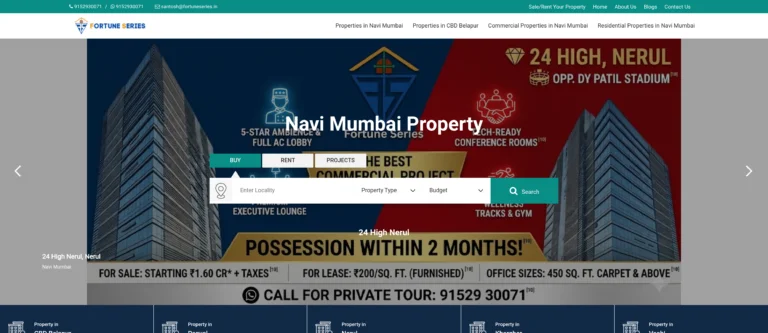 Fortune Series – Website
 Pronoesis – Website
 Texas Spine and Pain – Website
 Mindvein – Website
 Mario Products – Website
 Spectrum Filtration – Website
 IAA India Chapter – Website
 The Premium Basket – Website
 Lamar World – Website
 Spring Galaxy – Website
 Excel Wallpapers – Website
 Siddha Group – Website
Related work from our portfolio: