
Head office / Navi Mumbai
Best Ruby on Rails development company in Navi Mumbai
Ruby on Rails is a good fit for the software that sits behind a working business: orders, stock, dispatch, approvals and invoices. The Adroit builds it from a head office in Navi Mumbai for firms that run on consignments, dealers and warehouses.
Read more
This page covers what we build for the Navi Mumbai, Thane-Belapur, Vashi, Airoli, Mahape and Turbhe business belts: shipment tracking, dealer portals, warehouse and barcode flows, Tally, SAP and Zoho integration, GST-style e-invoicing, approvals and dashboards. Cost and timelines come after discovery, never from a page.
- 7+Years in digital marketing
- 120+Brands served
- 55+Team members
- 250+Projects delivered
- 100+Certifications held
Why The Adroit
We start from what happens on the ground
Discovery starts from what happens on the ground, not from a feature list. Writing the workflow ledger for your own business is the first deliverable of a project.
Your accounts system stays the system of record
We treat Tally, SAP and Zoho as integration targets only: the Rails application reads and writes through the route each one supports, and your existing system stays the system of record.
A pilot before cutover
A system that people use all day should never switch on in one go. One warehouse, branch or dealer group runs it next to the old process while we compare results line by line.
Approval rules are yours to set
Approvals are where operations businesses differ most, so the rules are yours to set. Thresholds are decided with you and stored as settings, not buried in code.
A head-office team you can meet
You can ask for a discovery workshop at the head office or at your own site, and the people who scoped the build are the people you meet at review time.
We build to the rules in force
E-invoicing and e-way bill rules are set by the tax authorities and change over time. We build to the specification in force when the work is done; confirm what applies to you with your chartered accountant.
What a Rails application replaces
Each habit usually becomes one module of a single application.
Shipment and dispatch tracking
Status milestones, document checklist, transporter updates, proof-of-delivery upload.
Dealer and distributor portal
Login per dealer, own price list, credit and outstanding checks, order history.
Warehouse and inventory
Goods-in, locations, batches, pick lists, cycle counts, reorder alerts.
Invoicing and e-invoice jobs
Invoice data, e-invoice and e-way bill requests, credit notes, retries.
Approval workflow
Rules by amount, party or exception, escalation, reasons recorded.
Dashboards and MIS
Scheduled queries, filtered exports, role-restricted views.
How we work
Six phases, shown here in four groups. We agree a plan in the proposal after discovery instead of quoting a number here.
Walk-through and discovery
We sit with stores, dispatch, sales and accounts and write the workflow ledger for your business. Output: scope, wireframes, integration list.
Core build and integrations
Master data, roles and the main workflows, shown in short demos so corrections happen early. Tally, ERP, GST, transporter, payment and messaging connections, with retries and an error screen your admin can read.
Pilot
One warehouse, branch or dealer group runs it next to the old process while we compare results line by line.
Cutover, training and support
Data migration, switch-over and hands-on training for each role, with a written hand-over. Then fixes, upgrades and a monthly progress report.
Visit the head office in Navi Mumbai
Navi Mumbai is our head office. Our Rails engineering team works from there, with other teams in Mumbai, Navi Mumbai, Bangalore, Delhi.
Day to day, work runs over calls, screen shares and written decisions, so a project does not depend on anyone travelling.
Awards and Recognition





The Adroit is a Ruby on Rails development company with its head office in Navi Mumbai. We build custom Rails applications for operations-heavy businesses: shipment and dispatch tracking, dealer and distributor portals, warehouse and barcode tools, Tally, SAP and Zoho integrations, GST e-invoice and e-way bill style workflows, role-based approvals and reporting dashboards. Work is scoped after discovery, built on a supported Rails 8.x and Ruby release, and reported to you monthly.
Warehouse, barcode and QR flows
How do warehouse, barcode and QR flows work in a Rails system?
The most reliable way to keep stock numbers honest is to never edit a quantity directly. Every change is a movement: goods in, putaway, pick, transfer, adjustment, return. The stock on hand is the sum of movements, and each movement records the item, batch, location, user and time. Rails makes this safe with database transactions and row locking, so two people scanning the same shelf cannot both take the last unit.
Barcode and QR scanning is simpler than it sounds. Most USB and Bluetooth scanners act like a keyboard, so a Rails screen can take a scan straight into a form, and a phone can read a code through the browser camera. The application looks up the item or batch, applies the movement and shows the result immediately. Rugged handhelds work too if they can run a browser. Label design and printing are scoped as a separate item.
Batch and expiry awareness, pick-by-oldest-first rules, location-level counts and reorder alerts all build on the same movement ledger rather than on separate tables that can drift apart.
Scan to stock, in order
- Scan the item, batch or location label
- Look up the record and check the rule (expiry, hold, location)
- Write one movement inside a transaction
- Show the new balance and who scanned it
- Sync to the ERP as a background job with retries
Hardware choice (keyboard-style scanners, phones, handhelds) is confirmed in discovery.
| Event | Location | Change | By |
|---|---|---|---|
| Goods in | Inward bay | + qty | Stores |
| Putaway | Rack A to B | transfer | Stores |
| Pick for order | Rack B | - qty | Picker |
| Return | Returns bay | + qty | Stores |
| Count adjustment | Rack B | - qty, reason | Supervisor |
| On hand = sum of all lines | |||
Integration targets
Which accounting, ERP and GST systems can a Rails application connect to?
A new application should not ask your team to retype what the accounts system already holds. We treat Tally, SAP and Zoho as integration targets only: the Rails application reads and writes through the route each one supports, and your existing system stays the system of record. The exact route depends on your version, licence and hosting, and is confirmed in discovery.
Typical routes per target
- Tally: its XML-over-HTTP interface or scheduled import and export files, depending on version and setup.
- SAP: APIs or a middleware layer, depending on edition and licence.
- Zoho: REST APIs with token-based authorisation.
- GST systems: the official e-invoice and e-way bill APIs, directly or through an authorised provider.
- Transporters, payments, messaging: each partner's API, webhook or file drop.
| Integration | Rails approach | What to watch |
|---|---|---|
| Accounts / ERP sync | Background jobs push orders, invoices and stock movements; scheduled jobs pull masters such as parties and items | One owner for each field, so edits do not overwrite each other |
| E-invoice and e-way bill | Queued request, response stored on the invoice (reference number and signed QR), retry with a visible status | Specifications and thresholds change; confirm what applies to you with your chartered accountant |
| Webhooks from partners | Verified endpoint that records the payload first, then processes it in a job | Duplicates and out-of-order messages are normal, so each handler must be safe to run twice |
| File exchange | Scheduled import with validation report; export in the format the other side expects | Reject bad rows with a reason rather than failing the whole file |
E-invoicing and e-way bill rules are set by the tax authorities and change over time. We build to the specification in force when the work is done. This page describes a technical build and is not tax or legal advice.
Reporting dashboards
What reporting dashboards do operations teams ask for?
Most managers do not want a dashboard, they want the three or four answers they currently wait a day for. We start from those questions, then decide where the data comes from and how fresh it must be. Role-restricted views mean a branch head sees the branch, the owner sees everything, and a dealer sees only their own account.
| Question | Report | Built from | Who sees it |
|---|---|---|---|
| What is stuck right now? | Open consignments and orders by age and state | Shipment and order timelines | Dispatch, operations head |
| Which dealers are near their limit? | Credit and outstanding by dealer | Orders plus ledger sync | Accounts, sales |
| What needs reordering? | Stock against reorder level, by batch and expiry | Movement ledger | Stores, purchase |
| Where do approvals wait? | Time spent at each approval step | Approval history | Management |
| What failed to sync? | Integration queue and error list | Job status and logs | Admin, our team |
Heavy reports run as scheduled jobs or on a read-only copy of the data so that a month-end query never slows the dispatch desk. Exports to CSV or Excel are standard. Live views use Rails' Hotwire tools where a screen should update without a refresh.
Controls and upkeep
What security and audit controls does an operations system need?
When software holds prices, credit and stock, a mistake or a misuse costs money. Rails ships with sensible defaults against common web attacks, and we add the controls that suit an operations business: least-privilege roles, an audit trail on money and stock changes, encrypted credentials for every integration and tested backups.
Upkeep matters as much as the first build. Rails and Ruby both have published support windows, so we plan upgrades as routine work instead of an emergency. Check the current supported branches at rubyonrails.org/maintenance and ruby-lang.org before committing to dates. For a deeper look at how Rails is used for protection, see our post on Rails and cybersecurity.
We write to the Rails 8.x line and a currently supported Ruby release. Support windows are published by the Rails and Ruby projects, not by us, so confirm them on the pages above when you plan.
| Control | How it is done in Rails | Why an operations team cares |
|---|---|---|
| Role-based access | Authentication plus a policy layer (for example Pundit or CanCanCan) on every screen and action | A dealer or picker sees only what the job needs |
| Audit trail | Versioning of key records (for example PaperTrail) plus event rows for state changes | "Who changed this price" has an answer |
| Secrets for integrations | Encrypted credentials, never stored in code or chat | Tally, GST and payment keys stay out of reach |
| Dependency and code checks | Automated vulnerability scans (for example Brakeman and bundler-audit) in the build | Known issues are caught before release |
| Backups and restore | Scheduled database backups and a restore test written into the runbook | A backup that has never been restored is a hope, not a control |
Want this for your business? Discuss your operation
Questions
FAQs
Yes. Our head office is in Navi Mumbai and our Ruby on Rails engineering team works from there, with other teams in Mumbai, Bangalore, Delhi. Discovery workshops can be held at the head office or at your own site, and day-to-day work runs over calls, screen shares and written decisions. You receive a monthly progress report. Any travel or on-site days are agreed with you in the proposal.
Most requests are operational: shipment and dispatch tracking, a dealer or distributor portal, a warehouse and inventory system with barcode or QR scanning, an approval workflow, a GST invoicing module, or a management dashboard fed from the accounts system. They are usually built as one Rails application with role-based access, then connected to the tools the company already uses rather than replacing them.
Spreadsheets break when many people edit them and no one can see who changed what. A ready-made product is the right call when your process is standard and it already fits most of it. Rails is worth considering when your dealer rules, approvals or warehouse flow are what set you apart, when several tools must behave as one, or when per-user fees grow faster than the value. Many firms keep their accounting package and build the portal and workflow around it.
In most cases, yes, and we treat them as integration targets while your existing system stays the system of record. Tally is usually reached through its XML-over-HTTP interface or scheduled import and export files, SAP through its APIs or a middleware layer depending on edition and licence, and Zoho through its REST APIs. We confirm the exact route in discovery because it depends on your version, hosting and who owns the data.
Generally yes. A Rails application can build the invoice data, submit it to the government e-invoice system in a background job, store the returned reference number and signed QR code on the invoice, and request an e-way bill when goods move. Access is usually through the official APIs, directly or via an authorised provider. Thresholds and formats change over time, so confirm what applies to you with your chartered accountant. We build to the specification in force and do not give tax advice.
Each consignment is a record with a defined set of states, such as booked, papers ready, picked up, in transit, delivered and closed. Every change is saved as an event with a time, a user and a reason, and documents are stored against the record with a checklist of what is missing. Updates from transporters arrive through an API, webhook, file or a simple form. The milestones for import, export and domestic moves differ, so we list them with your operations team in discovery.
Each dealer logs in and can only load their own records, while sales, accounts and stores see the same order through different screens. Approval rules, such as credit limit breaches, special rates, returns or restricted goods, route an order to the right desk and record who decided, when and why. Thresholds are stored as settings that you can review, not hard-coded, and every handover is written to an audit trail.
Yes. Most USB and Bluetooth scanners behave like a keyboard, so a Rails screen can accept a scan straight into a form, and phones can scan through the browser camera. The application looks up the item, batch or location, records one stock movement inside a database transaction and shows the new balance. Rugged handheld devices also work if they can run a browser. Label design and printing are scoped separately.
More questions (4)
External calls run as background jobs with retries and a visible status, so a slow response does not block the billing desk or lose an invoice. Handlers are written to be safe if they run twice, because duplicate messages are normal. Failures appear on an admin screen with the reason, and every attempt is recorded in the audit log so your team can see what was sent and what came back.
Typical ones are open consignments and orders by age, credit and outstanding by dealer, stock against reorder level with batch and expiry, time spent at each approval step, and an integration error list. Views are role-restricted, exports to CSV or Excel are standard, and heavy reports run on a schedule so a month-end query does not slow down dispatch. We start from the questions managers ask today and work backwards to the data.
We scope after discovery. The main drivers are the number of roles and screens, how many systems must be integrated (Tally, SAP, Zoho, GST, transporters, payments, messaging), data migration from spreadsheets or an old system, reporting needs, hosting and security requirements, and how many sites or dealer groups go live at once. The proposal sets out scope, engagement model and timeline, and we do not quote a price or a date from a web page.
By phasing. We import your existing masters, run one warehouse, branch or dealer group on the new application beside the old process, compare results line by line, and fix gaps before cutover. Training is given per role, and the old process stays available until the pilot team signs off. The rollout plan, including who approves each phase, is written into the proposal.
Read the full guide
6 sections with the detail behind this page
Read the full guide
6 sections with the detail behind this pageThe detail behind this page, section by section. Open any heading to read it; everything stays on this page.
What do Navi Mumbai operations businesses use Ruby on Rails for?
What do Navi Mumbai operations businesses use Ruby on Rails for?
Who we build for
Navi Mumbai is a working city. Around the Thane-Belapur belt and the Mahape, Turbhe and Airoli industrial pockets there are factories, chemical and pharma units, warehouses, freight forwarders feeding the JNPT (Nhava Sheva) port, wholesale traders and distributors, plus builders and institutions in Vashi, Belapur and Kharghar. The software these firms need is rarely a brochure site. It is the system that tells the stores, the dispatch desk and the accounts team the same story.
Rails suits that job for plain reasons. Its conventions mean a new engineer can find the order, the shipment or the approval without a guided tour. Database transactions, background jobs, file storage, email and authentication are part of the framework or its mature gems. And a Rails codebase tends to stay readable as an operation adds one more dealer tier, one more warehouse, one more approval step.
Our engineering team works from the head office in Navi Mumbai and builds for customers wherever they are. For what a Rails engagement includes in general (service lines, version support, frameworks), start with our Ruby on Rails services overview; this page stays with the operations side.
Business belts we hear from
- Vashi
- Belapur / CBD
- Nerul
- Kharghar
- Airoli
- Ghansoli
- Mahape
- Turbhe
- Panvel
- Logistics and port-linked trade: consignment status, document checklists, transporter updates
- Manufacturing and chemicals: dealer ordering, batches, dispatch
- Wholesale and distribution: credit limits, price lists, repeat orders
- Warehousing and pharma supply: stock locations, batch and expiry awareness
Place names are location references only. Projects run remotely or in workshops, as agreed.
Which day-to-day operations does a Rails application replace?
Which day-to-day operations does a Rails application replace?
Workflow ledger
Discovery starts from what happens on the ground, not from a feature list. Each habit below usually becomes one module of a single Rails application, and each module has a counterpart it must stay in step with. Writing this table for your own business is the first deliverable of a project.
| Operation today | Rails module | What the application handles | Usually connects to |
|---|---|---|---|
| Consignment status is chased by phone | Shipment and dispatch tracking | Status milestones, document checklist, transporter updates, proof-of-delivery upload | Transporter and carrier APIs, SMS, email |
| Dealers phone or message in their orders | Dealer / distributor portal | Login per dealer, own price list, credit and outstanding checks, order history | Tally, SAP or Zoho for ledgers and stock |
| Stock is counted on paper at the godown | Warehouse and inventory | Goods-in, locations, batches, pick lists, cycle counts, reorder alerts | Barcode and QR scanners, ERP |
| Invoices are typed twice, once for GST | Invoicing and e-invoice jobs | Invoice data, e-invoice and e-way bill requests, credit notes, retries | Government e-invoice and e-way bill APIs, accounts |
| Approvals travel by WhatsApp and email | Approval workflow | Rules by amount, party or exception, escalation, reasons recorded | Email and WhatsApp notifications |
| Quotes go out as PDF attachments | B2B quotes and repeat orders | Catalogue, quote approvals, reorder in one click, order status | CRM, payment gateway |
| Management asks for numbers on request | Dashboards and MIS | Scheduled queries, filtered exports, role-restricted views | ERP and accounting data |
| Staff pass one Excel file around | Admin back-office | Role-based access, history of who changed what, bulk import | Your existing database or sheets |
- Chasing consignmentsShipment tracking
- Phoned-in ordersDealer portal
- Paper stock countsWarehouse module
- Double invoice entryE-invoice jobs
- Chat approvalsApproval workflow
- PDF quotesB2B ordering
- Numbers on requestDashboards
- One shared ExcelAdmin back-office
How does Rails track shipments and port-linked consignments?
How does Rails track shipments and port-linked consignments?
Logistics and port-linked supply chains
A shipment is a record that changes state: booked, documents ready, picked up, in transit, at the warehouse, delivered. Rails models that well. Each consignment becomes one record with a defined set of allowed states, and every change is stored as an event with a time, a user and a reason, so the question "where is it and who touched it last" has one answer.
For firms whose goods pass through the JNPT (Nhava Sheva) side of the supply chain, the useful extras are a document checklist per consignment (invoice, packing list, transport papers), alerts when a document is still missing, and a customer-facing status page so the sales team stops answering the same call repeatedly. The exact milestones differ for import, export and domestic moves, so we list them with your operations lead in discovery.
Transporter and carrier updates arrive in whatever form the partner supports: an API, a webhook, a scheduled file or, at worst, a quick form for the driver or dispatcher. The application accepts each route and writes it to the same timeline.
What one shipment record holds
- Parties and route: consignor, consignee, origin, destination, transporter
- Documents: files stored against the record, with a checklist of what is missing
- Timeline: every state change with time, user and reason
- Exceptions: delay, damage or hold, each with an owner and a follow-up date
- Links: the order, the invoice and the e-way bill, where applicable
Which documents apply depends on your goods and lanes. Confirm requirements with your customs or logistics advisers.
- BookedOrder and parties confirmed
- Papers readyChecklist complete or flagged
- Picked upTransporter and vehicle recorded
- In transitUpdates from partner or driver
- DeliveredProof of delivery uploaded
- ClosedInvoice and ledger matched
How are dealer portals and approval chains built in Rails?
How are dealer portals and approval chains built in Rails?
Dealer portals and role-based approvals
A dealer portal replaces the phone call and the spreadsheet price list. Each dealer logs in and sees only their own price list, credit position, open orders and invoices. Behind it, your sales and accounts teams see the same order with different screens and different permissions. Rails handles this well through authenticated users, scoped queries (a dealer can only ever load their own records) and an authorisation layer written once and reused on every screen.
Approvals are where operations businesses differ most, so the rules are yours to set. The table shows the pattern we usually propose; thresholds are decided with you and stored as settings, not buried in code.
| Situation | Routes to | What the system records |
|---|---|---|
| Order is within the dealer's credit and price list | Auto-accept Passes straight to dispatch planning | Order, price list used, credit position at that moment |
| Order exceeds the credit limit or has overdue invoices | Accounts hold Accounts approves or rejects | Who decided, when, and the reason entered |
| Dealer asks for a special rate | Sales manager Then a second approver above a set value | Requested and approved rate, approver, validity |
| Return or credit note raised | Stores + accounts Both confirm | Items, condition, linked invoice, both sign-offs |
| Dispatch of high-value or restricted goods | Named approver Release before pick | Release time, user, documents attached |
- Step 01DealerPlaces the order against own price list
- Step 02Sales deskReviews special rates or quantities
- Step 03AccountsChecks credit and outstanding
- Step 04DispatchPlans pick, vehicle and invoice
Portals for other kinds of audiences are covered on our sibling pages: see Rails for SaaS and product teams for multi-tenant products, and Rails for institutions in New Delhi for public-facing portals.
How is a Rails rollout phased for a working warehouse or dispatch desk?
How is a Rails rollout phased for a working warehouse or dispatch desk?
Rollout phases
A system that people use all day should never switch on in one go. We phase the work so a small group finds the gaps first. Durations depend on scope, integrations and how quickly decisions come back, so we agree a plan in the proposal after discovery instead of quoting a number here.
Walk-through and discovery
We sit with stores, dispatch, sales and accounts and write the workflow ledger for your business. Output: scope, wireframes, integration list.
Written scopeCore build
Master data, roles and the main workflows, shown in short demos so corrections happen early.
Demo each milestoneIntegrations
Tally, ERP, GST, transporter, payment and messaging connections, with retries and an error screen your admin can read.
Alongside the buildPilot
One warehouse, branch or dealer group runs it next to the old process while we compare results line by line.
Parallel runCutover and training
Data migration, switch-over and hands-on training for each role, with a written hand-over.
Hand-over notesSupport and review
Fixes, upgrades and a monthly progress report on what changed and what is next.
Monthly reportWhat does it mean to work with the head-office team in Navi Mumbai?
What does it mean to work with the head-office team in Navi Mumbai?
Working with the head office
Navi Mumbai is our head office. Our Rails engineering team works from there, with other teams in Mumbai, Navi Mumbai, Bangalore, Delhi. For a Navi Mumbai business, that makes a few things practical: you can ask for a discovery workshop at the head office or at your own site, you can reach founder-level decision makers when scope or priorities need a call, and the people who scoped the build are the people you meet at review time.
Day to day, work runs over calls, screen shares and written decisions, so a project does not depend on anyone travelling. Calls, demos and written updates keep you informed throughout. You receive a monthly progress report covering what was delivered and what is planned next; that is the one reporting rhythm we commit to, so it never becomes noise.
Hand-over is part of the plan: set-up notes and a short guide for your administrators, so the system does not live in one person's head. What is handed over, including source access, is written into the proposal.
Related pages
- Ruby on Rails services: the full service overview
- Rails across India: remote delivery and vendor checklist
- Rails in Mumbai: media, fintech and commerce
- Rails in Bangalore: SaaS and product teams
- Rails in New Delhi: institutional portals
- Hire Ruby on Rails developers
- Website development in Navi Mumbai
- SEO in Navi Mumbai
- Navi MumbaiHead office, Rails engineering
- MumbaiTeam
- BangaloreTeam
- New DelhiTeam
- Workshops, demos and reviews in person or over screen share
- Decisions recorded in writing
- Monthly progress report: delivered, and what is next
- Hand-over: set-up notes and a guide for your administrators
Ready to map your own operation? Use the form below or the contact page to book a discovery call.
Ready to map your own operation?
Use the form below or the contact page to book a discovery call.
What's More
How Are We Different?
Dedicated Account Manager
SEO Enabled Websites
Responsive Websites
Site Security Upgrades & Maintenance
Website Speed & Performance Optimization
Timely Delivery
Easy to use CMS
Google PSI Score Above 80
Maximum 12 Hours TAT
Secured & Optimised Website Delivery
15 Days Cooling Period
Your Success, Our Reputation
120+ brands have trusted us with their marketing and websites over 7+ years.
Here are some of the clients we have worked with.



























































































Latest and Greatest Posts
The Adroit Reviews
Rated 5.0 from 19 client reviews on Clutch. Read our Clutch profile
Get in Touch
Work That Works
A selection of recent campaigns, websites, reels and emailers delivered for our clients.
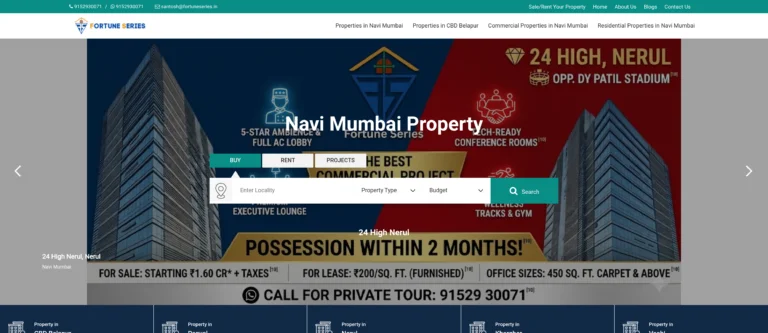 Fortune Series – Website
 Pronoesis – Website
 Texas Spine and Pain – Website
 Mindvein – Website
 Mario Products – Website
 Spectrum Filtration – Website
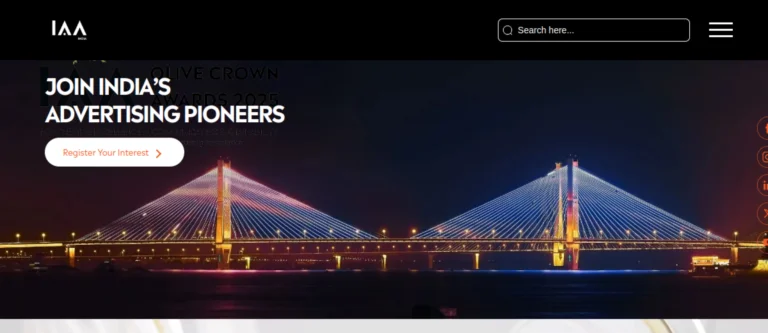 IAA India Chapter – Website
 The Premium Basket – Website
 Lamar World – Website
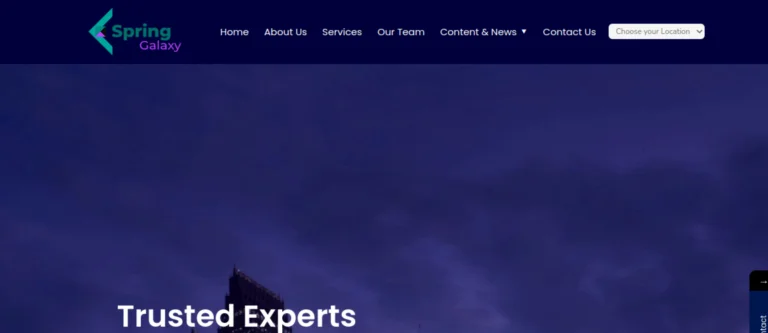 Spring Galaxy – Website
 Excel Wallpapers – Website
 Siddha Group – Website
Related work from our portfolio: