
Product engineering · PHP 8.5 · Laravel 13
Best PHP development company in Bangalore
We build the server side of software products: multi-tenant SaaS back ends, API-first platforms, subscription billing and internal platforms, for startups, D2C brands and teams that sell to customers in the US and Europe.
Our head office is in Navi Mumbai and we have a team in Bangalore (Bengaluru).
Read more
Work is scoped in writing, built on current PHP and Laravel or Symfony, and reported on monthly.
- Written scope agreed before the build starts
- API contract reviewed before the code is written
- Monthly progress report for the whole engagement
- 7+Years in digital marketing
- 120+Brands served
- 55+Team members
- 250+Projects delivered
- 100+Certifications held
Why The Adroit
Written scope before the build starts
We list features as launch-critical, soon and later, agree the architecture, and then quote.
The API contract comes before the code
An unreviewed change to a response shape breaks a web app, a mobile app and a partner integration at once, so the contract is reviewed before the code is written.
Tenancy decided in discovery
Tenancy is the decision that is hardest to reverse, so it is made in discovery and written down with the reasons.
Stripe and Razorpay billing
Stripe is commonly chosen for international cards, Razorpay for UPI, netbanking and Indian cards. Some products use both, one per customer region.
Help with US and European security questionnaires
We help with the engineering side: building the application controls those questions are about, and helping you write accurate answers about how the application behaves.
The same delivery process as every team
The team in Bangalore follows the same delivery process as our other teams: written scope, sprints, demos and a monthly progress report.
What we build
SaaS and B2B startups
A tenant-aware back end, plans and billing, and an API your front end and partners can rely on.
PHP development servicesD2C and marketplace brands
Order, inventory and subscription logic that has outgrown a plugin, with a headless or custom storefront where it pays.
WordPress development servicesGCC-style internal platforms
Role hierarchies, approvals, reporting and integrations for a parent organisation elsewhere.
Multi-tenant back ends
Tenancy is the decision that is hardest to reverse, so it is made in discovery and written down with the reasons.
API-first platforms
By writing the contract before the code, so a web front end, a mobile app and a partner integration can all use the same back end.
Mobile app developmentSubscription billing
We integrate Stripe and Razorpay. Stripe is commonly chosen for international cards, Razorpay for UPI, netbanking and Indian cards.
What each stage needs from the PHP back end
Most products are over-built at the start and under-built when the first large customer arrives.
MVP
Authentication, one or two plans, basic roles, error tracking and automated deploys, on one Laravel application with one database.
First customers
Tenant scoping, background jobs, an audit trail, and backups with a tested restore, on the same monolith made tenant-aware from day one.
Growth
Feature tests, CI, staging, feature flags, caching and query review, on a modular monolith that is API-first.
Scale-up and enterprise-ready
Load tests, tracing, rate limits, SSO and per-tenant data export, then access-control evidence, dependency audits, an incident runbook and questionnaire answers.
A team in Bangalore, the head office in Navi Mumbai
The typical buyer in Bangalore is a product company, not a business that wants a brochure site: a SaaS founder with a pilot customer, a D2C brand outgrowing its storefront plugin, a captive or GCC-style unit building an internal platform for a parent company overseas, or a services firm packaging its know-how as a product.
The head office is in Navi Mumbai, and the team in Bangalore follows the same delivery process as our other teams.
Awards and Recognition





In short
A PHP development company in Bangalore builds and maintains the server side of web products: APIs, multi-tenant SaaS back ends, billing, admin consoles and integrations. The Adroit has a team in Bangalore and its head office in Navi Mumbai. We build on current PHP (8.4 or 8.5) with Laravel 13 or Symfony 7.4 LTS, quote after discovery, and report progress monthly.
Who this is for
What does PHP development look like for Bangalore product teams?
Bangalore buys software differently from most cities. The typical buyer here is a product company, not a business that wants a brochure site: a SaaS founder with a pilot customer, a D2C brand outgrowing its storefront plugin, a captive or GCC-style unit building an internal platform for a parent company overseas, or a services firm packaging its know-how as a product for customers in the US and Europe. These buyers ask about tenancy models, API contracts, release pipelines and audit evidence long before they ask about page design.
That is the work our Bangalore team is organised around. The head office is in Navi Mumbai, and the team in Bangalore follows the same delivery process as our other teams: written scope, sprints, demos and a monthly progress report. PHP suits this work better than its reputation suggests. Laravel 13 and Symfony 7.4 LTS ship with queues, scheduling, authentication and testing tools, so engineering time goes into your product rather than plumbing. For the full range of what we deliver in PHP, see our PHP development services overview.
If you are weighing an outside product team against hiring in-house, the useful question is what you want to own. The roadmap and the domain knowledge stay with you; the build, the upgrades and the release engineering can be shared. How code and documentation are handed over is agreed in the proposal.
MVP to scale
What does each stage of a SaaS product need from its PHP back end?
Most products are over-built at the start and under-built when the first large customer arrives. The table maps the usual stages to the architecture that fits each one, so you pay for what the current stage needs and know what is coming next. Timelines vary with scope; a focused MVP is commonly 8-14 weeks, and the later stages are open-ended by nature.
| Stage | Question being answered | PHP shape that fits | What we put in place | Watch for |
|---|---|---|---|---|
| 1. MVP | Will anyone pay for this? | One Laravel application, one database, server-rendered or Inertia pages | Authentication, one or two plans, basic roles, error tracking, automated deploys | Building features nobody has asked for |
| 2. First customers | Can customers onboard without hand-holding? | Same monolith, tenant-aware from day one, queues for email and imports | Tenant scoping, background jobs, audit trail, backups with a tested restore | Tenant data leaking through an unscoped query |
| 3. Growth | Can the team ship often without breaking things? | Modular monolith, API-first, optional separate front end | Feature tests, CI, staging, feature flags, caching, query review | Slow queries and N+1 patterns growing unnoticed |
| 4. Scale-up | Can we serve larger customers reliably? | Several app servers, Redis, workers split by queue, search engine, CDN | Load tests, tracing, rate limits, SSO, per-tenant data export | One tenant’s heavy import slowing everyone else |
| 5. Enterprise-ready | Can we pass a customer’s security review? | Documented architecture, hardened configuration, separated environments | Access-control evidence, dependency audits, incident runbook, questionnaire answers | Describing controls you do not actually operate |
Production
What does a multi-tenant PHP app need to run well in production?
A SaaS product is judged by how it behaves on its worst day, not its best. These four areas are where multi-tenant applications most often fail, and where we spend design time before launch.
Queues and workers
Slow work such as imports, exports, emails and billing runs moves to Redis-backed queues with retries and failure alerts, split so one tenant’s bulk job cannot starve the rest.
Observability
Structured logs carrying tenant and request IDs, error tracking, health checks and alerts, so a customer’s complaint can be traced to a specific request.
Caching and speed
OPcache on, Redis for cache, eager loading to avoid N+1 queries, indexes reviewed against real query plans, and load tests before launch rather than after.
Release safety
CI on every change, database migrations written to be backward-compatible, feature flags for risky changes and a rollback path that has been tried once in staging.
Security reviews
How does a PHP team help you answer US and European security questionnaires?
Procurement teams at overseas customers send questionnaires covering access control, encryption, logging, backups, sub-processors and incident handling. We help with the engineering side: building the application controls those questions are about, and helping you write accurate answers about how the application behaves.
What we do not do is claim certifications on your behalf. A SOC 2 report or an ISO 27001 certificate is an audit of your organisation by an independent auditor, not a property of a codebase. Where data-protection law applies, such as the Digital Personal Data Protection Act, 2023 or GDPR, your compliance counsel decides what is required and we implement the technical measures they specify. Our PHP development in India page explains how remote projects are run for overseas buyers.
| Questionnaire topic | Application control we build |
|---|---|
| Access control | Role-based permissions, SSO-ready sign-in, optional two-factor |
| Audit logging | Append-only log of admin actions and data exports |
| Data lifecycle | Per-tenant export and deletion jobs |
| Secrets and encryption | Encrypted secrets, TLS everywhere, field encryption where needed |
| Dependencies | composer audit in CI, planned upgrades |
| Backups and incidents | Scheduled backups, a tested restore, a written runbook |
Want this for your business? Discuss your product
Questions
FAQs
It takes the product from idea to a running, billable service. That means scoping the first release, choosing the tenancy model, building the Laravel or Symfony back end and its API, wiring authentication and subscription billing, setting up queues, deployments and monitoring, and then maintaining it as customers arrive. Our team in Bangalore works to a written scope and a monthly progress report, with the head office in Navi Mumbai supporting delivery. The aim is a codebase your own engineers can later take over or extend.
Pick the model by tenant count and by how strict separation must be. A single database with a tenant column on every table is cheapest to run and suits many small tenants, but needs scoping enforced centrally and tested. Schema-per-tenant gives cleaner separation inside one PostgreSQL database. Database-per-tenant gives the strongest isolation and the simplest per-customer restore, at the cost of running migrations and monitoring for every tenant. We settle this in discovery, using your customer profile and contracts, and record why.
A focused MVP is commonly 8 to 14 weeks, though that range is only typical and depends on scope. The main variables are the number of user roles, how many external integrations are needed, whether billing is included, how much data must be migrated and how finished the interface must be. Discovery comes first: we list features as launch-critical, soon and later, then quote the first group. A date promised before that scoping step is a guess rather than a plan.
Yes, both are routinely integrated with Laravel and Symfony. Stripe is commonly chosen for international cards and Razorpay for UPI, netbanking and Indian cards. The hard part is not checkout but what follows: verifying webhook signatures, making handlers safe to run twice, handling upgrades with proration, retrying failed payments and keeping invoices and plan entitlements in step. Which provider you can use also depends on your business registration and the provider's own approval, which we cannot decide for you.
Yes, in three common ways. Inertia lets Vue or React pages sit on Laravel routes without a separate API for every screen. Livewire keeps most logic in PHP and suits admin-heavy products. A fully separate single-page or headless front end talks to a REST or GraphQL API. The right choice depends on whether other clients, such as a mobile app or partner integrations, need the same API. If they do, we write the API contract first and let every client build against it.
We help with the engineering side. That means building the controls the questions are about, such as role-based access, SSO-ready sign-in, audit logs, tenant data export and deletion, tested backups and dependency audits in CI, and helping you describe accurately how the application behaves. We do not claim certifications for you: a SOC 2 report or ISO 27001 certificate is an audit of your organisation by an independent auditor. For data-protection law, ask your compliance counsel what applies.
The Adroit has its head office in Navi Mumbai and a team in Bangalore. Projects run through a written scope, a shared backlog, scheduled demos and a monthly progress report, so how the work is run does not depend on which city anyone sits in. Meeting arrangements are agreed in the proposal; we do not assume you will visit, and you should not need to.
We quote after discovery, not before, because cost follows scope rather than a rate card. The factors that move it are the number of user roles, the tenancy model, integrations, billing complexity, data migration, how polished the interface must be, and how much automated testing and CI the project needs. For a defined MVP a fixed-scope quote usually fits; if requirements will change as you learn from users, time-and-material or a dedicated team is safer. Terms are set out in the proposal.
More questions (2)
Yes, for most business SaaS. PHP 8.5 was released on 20 November 2025 and gets security fixes until 31 December 2029 (php.net, checked Oct 2026), and Laravel 13 includes queues, scheduling, authentication and testing out of the box. Choose another stack when your team already standardises on it, or for workloads dominated by long-lived connections or heavy machine learning, where Node.js or Python may fit better. A short architecture conversation before you commit is worth having whichever way it goes.
Start on PHP 8.5 unless a dependency blocks it, with 8.4 as the fallback. 8.5 has active support until 31 December 2027 and security fixes until 31 December 2029; 8.4 is active until 31 December 2026 and secure until 31 December 2028 (php.net, checked Oct 2026). Laravel 13 needs PHP 8.3 to 8.5. Avoid 8.2, which is security-only until 31 December 2026, and anything older, which is end-of-life. Pin the version in composer.json and your Docker image so production matches CI.
Read the full guide
5 sections with the detail behind this page
Read the full guide
5 sections with the detail behind this pageThe detail behind this page, section by section. Open any heading to read it; everything stays on this page.
Should a multi-tenant Laravel app use one database, schemas or a database per tenant?
Should a multi-tenant Laravel app use one database, schemas or a database per tenant?
Multi-tenancy
Tenancy is the decision that is hardest to reverse, so it is made in discovery and written down with the reasons. The three common models trade isolation against running cost. A shared database with a tenant column is the cheapest to operate and is where many products start; a database per tenant gives the cleanest separation but multiplies migrations, connections and monitoring by the number of customers.
Whatever the model, the rule is the same: the tenant is resolved once, early in each request or job, and every query, cache key, file path and log line carries it. We test that rule directly with automated checks that try to read one tenant’s data while signed in as another. Packages for tenancy exist for Laravel and are worth evaluating, but they do not remove the decision.
Data-residency and sub-processor questions from overseas customers often decide the model more than cost does. Ask your largest prospective customer’s security contact what they expect before the schema is built, not after.
| Model | Isolation | Running cost and effort | Restoring one tenant | Fits when |
|---|---|---|---|---|
| Single database, tenant column | Logical; enforced by the application | Lowest; one schema to migrate | Hard; rows must be extracted | Many small tenants on self-serve plans |
| Schema per tenant (PostgreSQL) | Stronger; separate namespaces in one database | Medium; migrations run per schema | Moderate | Hundreds of mid-size tenants wanting cleaner separation |
| Database per tenant | Strongest; separate databases | Highest; connections, migrations and monitoring per tenant | Easiest; restore one database | Fewer, larger tenants; contractual or residency needs |
How do you build an API that a web app, a mobile app and partners can all use?
How do you build an API that a web app, a mobile app and partners can all use?
API contract first
By writing the contract before the code. When a web front end, a mobile app and a partner integration all depend on the same back end, an unreviewed change to a response shape breaks three things at once. The strip below is the order we work in; each step leaves something the team can inspect.
Model the resources
Agree the nouns, relations and permissions with product and front-end people.
Write the contract
An OpenAPI document or GraphQL schema, reviewed before code starts.
Mock and review
Front-end work begins against a mock while the back end is built.
Build and contract-test
Automated tests fail if a response drifts from the agreed spec.
Version and document
Published docs, an error format, pagination rules and a changelog.
Retire safely
Deprecation notices and usage checks before an old version is removed.
Which front end sits on top of the PHP back end?
There are three sensible patterns. Inertia lets Vue or React pages live on Laravel routes without a separate API for every screen, which keeps small teams fast. Livewire keeps most logic in PHP and suits admin-heavy products. A separate single-page or headless front end talking to REST or GraphQL is the right call when a mobile app or partners need the same API; if that is you, see our mobile app development work and our web development services.
REST is the default because tooling, caching and partner familiarity are strongest. GraphQL earns its place when many different clients need very different slices of the same data.
Error formats and pagination are the unglamorous decisions that save the most rework. Pick one error shape, one pagination style and one date format, and have the contract tests enforce them on every endpoint.
Which PHP and framework versions should a new build start on?
Which PHP and framework versions should a new build start on?
Versions
Start on the newest release your dependencies allow. Support windows decide how long a version keeps getting security fixes, and an application that launches on a version with a year left will be an upgrade project within its first year of life. The table shows the position as we last checked it.
| Release | Active support to | Security fixes to | For a new build |
|---|---|---|---|
| PHP 8.5 | 31 Dec 2027 | 31 Dec 2029 | Default choice; released 20 Nov 2025 |
| PHP 8.4 | 31 Dec 2026 | 31 Dec 2028 | Fine if a dependency is not yet ready for 8.5 |
| PHP 8.3 | Ended | 31 Dec 2027 | Laravel 13’s minimum; acceptable, plan the move up |
| PHP 8.2 | Ended | 31 Dec 2026 | Do not start here; upgrade existing apps now |
| PHP 8.1 and older | Ended | Ended | End-of-life; upgrade before anything else |
| Laravel 13 | Bug fixes to Q3 2027 | 17 Mar 2028 | Released 17 Mar 2026; needs PHP 8.3 to 8.5 |
| Symfony 7.4 LTS | Bug fixes to Nov 2028 | Nov 2029 | Long-term choice; needs PHP 8.2 or newer |
Sources: php.net/supported-versions.php, laravel.com/docs/releases and symfony.com/releases, all checked Oct 2026. If you are acquiring or inheriting a PHP product, check its version first: W3Techs (checked Oct 2026) reports PHP 8.x on 64.4% of sites running PHP, with 27.8% still on 7.x and 7.8% on 5.x, so roughly a third of PHP sites run releases that no longer get fixes.
How do you build subscription billing into a PHP SaaS product?
How do you build subscription billing into a PHP SaaS product?
Subscription billing
We integrate Stripe and Razorpay. Stripe is commonly chosen for international cards, Razorpay for UPI, netbanking and Indian cards. Some products use both, one per customer region. Which provider you can use also depends on your business registration and the provider’s own approval, which neither we nor your developers control.
The checkout screen is the easy part. The work is in what happens afterwards: verifying webhook signatures, making handlers safe to run twice, applying upgrades and downgrades with proration, retrying failed payments, and keeping invoices, plan limits and tenant status in step. We build these as queued, logged flows so a missed webhook can be replayed rather than reconciled by hand. For Indian customers, invoice fields such as GST details should be confirmed with your accountant before launch.
Keep invoice generation separate from the payment gateway. Tax and invoice rules differ by customer location, and a later change of provider should not rewrite your accounting records.
How is a project organised, and what changes the price?
How is a project organised, and what changes the price?
Working together
Discovery comes first: we list features as launch-critical, soon and later, agree the architecture, and then quote. Three engagement models cover most products, and the terms of whichever you choose are agreed in the proposal.
Fixed-scope project
A defined deliverable for an agreed scope, such as an MVP with a clear feature list. It suits work whose requirements are stable. Changes are handled as agreed scope changes.
Time and material
You pay for the effort used, with priorities set sprint by sprint. It suits products still learning from users, where the second month should not be fixed by the first month’s guesses.
Dedicated team
A team assigned to your product over a longer period, working from your backlog. It suits a roadmap that runs for many months and needs continuity of knowledge.
What changes the cost
Cost follows scope, and we quote after discovery rather than from a rate card. These are the factors that move it most:
- Roles and tenancy model: how many kinds of user, and how strict the isolation.
- Integrations: payment gateways, accounting, CRM, email, partner APIs.
- Billing complexity: flat plans are simple; usage, seats and proration are not.
- Data migration: moving customers off a spreadsheet or an older system.
- Interface depth: a clean admin console against a fully designed product UI.
- Quality bar: test coverage, CI depth and security-review readiness.
Discuss your product
Work is scoped in writing, built on current PHP and Laravel or Symfony, and reported on monthly.
What's More
How Are We Different?
Dedicated Account Manager
SEO Enabled Websites
Responsive Websites
Site Security Upgrades & Maintenance
Website Speed & Performance Optimization
Timely Delivery
Easy to use CMS
Google PSI Score Above 80
Maximum 12 Hours TAT
Secured & Optimised Website Delivery
15 Days Cooling Period
Your Success, Our Reputation
120+ brands have trusted us with their marketing and websites over 7+ years.
Here are some of the clients we have worked with.
































































































Latest and Greatest Posts


The Adroit Reviews
Rated 5.0 from 19 client reviews on Clutch. Read our Clutch profile
Contact Us for More
We’ve worked with clients of all sizes, all across the World. Starting from enterprises to startups. Let’s talk about your project and how we can help provide value to it on Digital.
Work That Works
A selection of recent campaigns, websites, reels and emailers delivered for our clients.
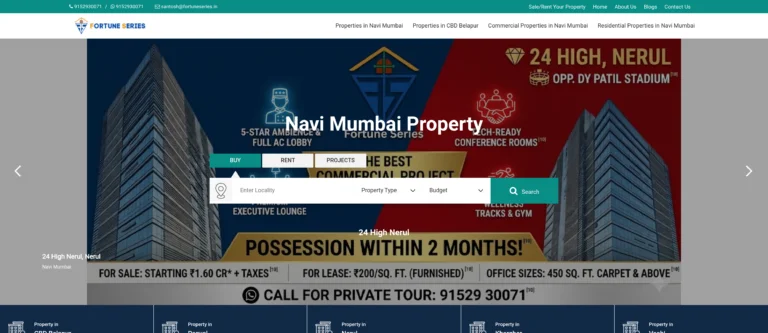 Fortune Series – Website
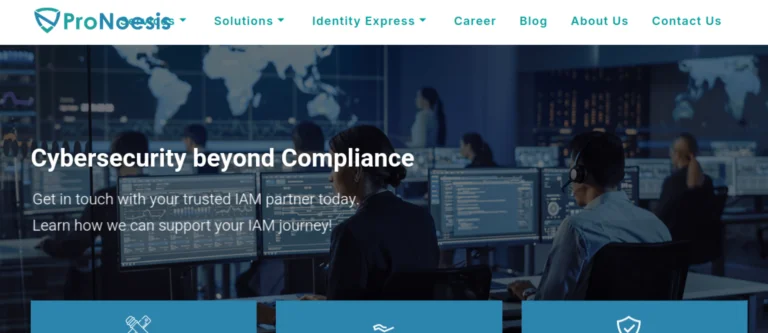 Pronoesis – Website
 Texas Spine and Pain – Website
 Mindvein – Website
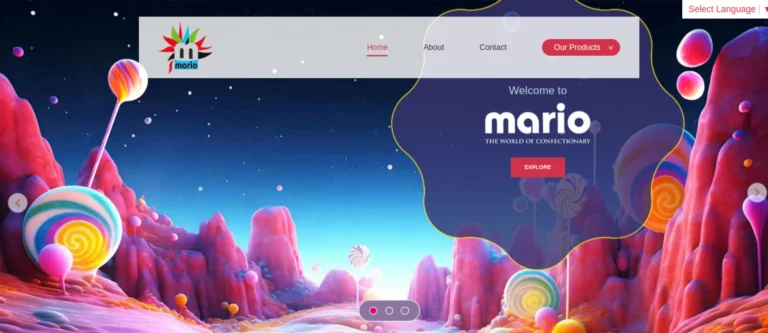 Mario Products – Website
 Spectrum Filtration – Website
 IAA India Chapter – Website
 The Premium Basket – Website
 Lamar World – Website
 Spring Galaxy – Website
 Excel Wallpapers – Website
 Siddha Group – Website
Related work from our portfolio: