
PHP engineering, current versions only
PHP Development Servicesfor applications that must keep working
PHP development services cover everything involved in building and running software on PHP: custom web applications and portals, SaaS products, e-commerce, WordPress and WooCommerce builds, APIs and integrations, upgrades of old codebases, performance work, security hardening and long-term maintenance.
Read more
Read it as a buyer’s guide: which PHP versions are still supported, which framework fits which job, what changes the price, how a PHP 5 or 7 upgrade is run, and where PHP is the wrong tool.
- 7+Years in digital marketing
- 120+Brands served
- 55+Team members
- 250+Projects delivered
- 100+Certifications held
Why The Adroit
Quoted after discovery, not from a rate card
Cost depends on scope, not on the language, so we do not publish a rate card. A price is quoted after discovery, with commercial terms set out in the proposal.
Current, supported PHP only
New builds target PHP 8.4 or 8.5. PHP 5 and 7 applications are moved to a supported 8.x version in controlled steps, tests first.
Security built in, not added at the end
We map the OWASP Top 10 risk areas to specific controls and check them during build and before launch. This is engineering practice, not a certification claim.
The same gates before every release
A change reaches production only after the same automated gates every time. That makes upgrades and features routine instead of risky.
We say where PHP is the wrong tool
PHP is a strong default for web applications, CMS sites and online stores, and weaker for real-time and data-science-first products.
Demos along the way, a monthly report once live
Projects run through discovery, demos at the end of each iteration and, once live, a monthly report.
What we build
Custom web applications and portals
Customer, dealer and partner portals, internal back-offices and workflow systems, built around your roles, approvals and reporting.
All nine servicesSaaS and subscription products
Multi-tenant platforms with plans, usage limits, invoicing and onboarding, using Laravel or Symfony queues, scheduling and billing integrations.
Architecture patternsE-commerce and marketplaces
WooCommerce, Magento and custom carts, B2B ordering with price lists, multi-vendor marketplaces, and payment, shipping and ERP connections.
Web development servicesCMS, WordPress and WooCommerce
Custom themes and plugins, editorial workflows and headless WordPress.
WordPress development servicesLegacy modernisation and upgrades
PHP 5 and 7 applications moved to a supported 8.x version in controlled steps, tests first.
How we upgradePerformance and security hardening
Profiling, query tuning, caching, dependency audits and OWASP-mapped fixes for applications that have slowed down or started to worry someone.
Security controls
How we work
Seven steps in four groups, each with something you can hold us to. Depth scales with project size.
Discover and design
We talk to the people who will use and pay for the system and map goals, users, constraints and existing systems. Framework, hosting, data model, integrations and security model are decided while changes are cheap.
Prototype and build
Wireframes and a clickable prototype let you react before building. Short, peer-reviewed iterations are each shown to you on staging at the end.
Test, harden and launch
Automated tests, an OWASP-mapped checklist, performance and acceptance testing. Scripted release with a rollback plan, data migration and a walkthrough for your team.
Support and improve
Updates, patching, fixes and enhancements, summarised in a monthly report.
Head office in Navi Mumbai, teams in three more cities
The Adroit's head office is in Navi Mumbai, with teams in Mumbai, Bangalore, Delhi, and we work with clients in any city remotely.
Each page below applies this page's standards to one market's typical projects. The engineering is the same everywhere; pick the closest industry or contact us.
Awards and Recognition





PHP development services are the design, build, upgrade and maintenance of web applications, APIs, online stores and CMS sites written in PHP, the server-side language used by about 70% of websites whose server language is known (W3Techs, checked Oct 2026). The Adroit builds on supported PHP 8.x releases with Laravel, Symfony, WordPress and WooCommerce. Head office is in Navi Mumbai, with teams in Mumbai, Bangalore, Delhi.
What do PHP development services include?
Nine kinds of work cover most PHP engagements, and real projects usually combine two or three, such as a portal that needs an integration layer. The wider website context sits in our web development services; this page covers the PHP engineering underneath.
Custom web applications and portals
Customer, dealer and partner portals, internal back-offices and workflow systems, built around your roles, approvals and reporting.
Typical deliverables: Data model, role matrix, admin panel, audit trail
SaaS and subscription products
Multi-tenant platforms with plans, usage limits, invoicing and onboarding, using Laravel or Symfony queues, scheduling and billing integrations.
Typical deliverables: Tenancy design, billing hooks, usage metering
E-commerce and marketplaces
WooCommerce, Magento and custom carts, B2B ordering with price lists, multi-vendor marketplaces, and payment, shipping and ERP connections.
Typical deliverables: Catalogue model, checkout, order sync
CMS, WordPress and WooCommerce
Custom themes and plugins, editorial workflows and headless WordPress. See our WordPress development services.
Typical deliverables: Theme or plugin code, editor roles, migration plan
REST and GraphQL APIs
Versioned, documented APIs for mobile apps, partners and single-page front ends, with authentication and rate limiting.
Typical deliverables: OpenAPI spec, auth scheme, API test suite
Integrations and automation
Payment gateways, ERP and accounting, CRM, shipping and messaging, built so a failed third-party call retries instead of losing data.
Typical deliverables: Integration map, retry and alert rules
Legacy modernisation and upgrades
PHP 5 and 7 applications moved to a supported 8.x version in controlled steps, tests first. See legacy upgrades.
Typical deliverables: Audit report, upgrade plan, test net
Performance and security hardening
Profiling, query tuning, caching, dependency audits and OWASP-mapped fixes for applications that have slowed down or started to worry someone.
Typical deliverables: Findings report, fixes, measurements
Maintenance and support
Framework and PHP updates, patching, monitoring, fixes and small enhancements, summarised in a monthly report.
Typical deliverables: Update log, monthly report, backlog
How much do PHP development services cost, and which engagement model fits?
Cost depends on scope, not on the language: two “PHP portals” can differ many times over in effort, so we do not publish a rate card. A price is quoted after discovery, with commercial terms set out in the proposal. Three models cover almost every engagement.
Fixed-scope project
A defined deliverable at an agreed price and timeline, with acceptance criteria in the proposal.
- Scope is clear and a budget or date depends on one number
- Requirements are still emerging; changes go through change requests agreed in the proposal
Time and material
You pay for effort spent, in iterations, re-prioritising as you learn.
- The product is evolving, such as an MVP, and someone decides priorities each iteration
- Finance needs a fixed total; ask for a capped first phase
Dedicated team
A team assigned to your roadmap monthly, working as an extension of yours.
- A long backlog, ongoing releases and a wish for continuity
- Only a few weeks of work, or nobody to prioritise it
What changes the price?
These factors explain most of the gap between a modest estimate and a large one. Answer them up front and the quote is faster and tighter.
| Cost driver | Keeps effort lower | Pushes effort higher |
|---|---|---|
| Scope clarity | Written requirements, one decision-maker | Ideas forming, many opinions |
| Custom business logic | Standard CRUD and content | Pricing rules, approval chains, calculations |
| Roles and permissions | One admin, one public user | Many roles, per-record permissions |
| Integrations | None, or one documented API | Several systems, two-way sync |
| Data migration | Fresh start or clean export | Years of inconsistent data |
| Design and UX | Existing theme | Custom interaction, accessibility targets, multiple languages |
| Security and compliance | Public content | Payments, personal data, audit trails |
| Scale and performance | Modest users and data | Traffic spikes, heavy reporting |
| Testing depth | Basic checks, manual acceptance | High coverage, browser tests |
| Hosting and DevOps | Managed host | Containers, several environments |
| Timeline pressure | Flexible date | Hard deadline |
| After launch | Occasional fixes | Ongoing roadmap, monitoring, upgrades |
How long does it take?
Typical industry ranges, indicative and scope-dependent, not commitments; our proposal sets the plan after discovery.
| Kind of project | Typical range (indicative) |
|---|---|
| Custom WordPress theme marketing site | Commonly 4 to 8 weeks |
| WooCommerce store with standard catalogue and payments | Commonly 6 to 12 weeks |
| Focused MVP web application | Commonly 8 to 14 weeks |
| Business portal with roles, workflows and a few integrations | Commonly 3 to 6 months |
| PHP version upgrade of a mid-size application | Often 4 to 12 weeks, driven by test coverage and dependencies |
| Large platform with many integrations and data migration | Often 6 months or more, delivered in phases |
Phasing controls cost and risk: launch a smaller first release, learn from real use, then fund the next phase.
Which industries use PHP development services?
The same building blocks, authentication, payments, reporting and integrations, recur across sectors. These nine are where we most often see PHP chosen. For technical SEO on a PHP site, see SEO services.
E-commerce and retail
Stores, B2B ordering, marketplaces, order and stock sync.
Finance and insurance
Customer portals, claims workflows, reconciliation, audit trails.
Healthcare and wellness
Appointments, patient portals, report delivery, role-based access.
Education and training
Learning portals, admissions and fee workflows, certificates.
Media and publishing
Editorial platforms, subscriptions, high-traffic delivery.
Logistics and manufacturing
Dealer portals, inventory, ERP integration, barcode flows.
Real estate and property
Listing platforms, lead capture, CRM sync.
SaaS and start-ups
Multi-tenant products, billing, API platforms, MVPs.
Services and B2B
Quote and booking systems, client portals, internal tools.
Want this for your business? Talk to a PHP engineer
Questions
FAQs
PHP development services are the planning, building, upgrading and maintenance of web software written in PHP. That includes custom web applications and portals, SaaS products, online stores, WordPress and WooCommerce sites, REST and GraphQL APIs, third-party integrations, legacy upgrades, performance tuning and security hardening. The Adroit delivers them on supported PHP 8.x versions, with a head office in Navi Mumbai and teams in Mumbai, Bangalore, Delhi.
Choose by the shape of the problem. WordPress or Drupal suit content-led sites run by editors. Laravel suits most custom applications, SaaS products and APIs, with queues, scheduling and authentication built in. Symfony suits complex, long-lived or multi-team systems and offers LTS releases. WooCommerce covers most small and mid-size stores. The framework matrix on this page compares twelve options; we confirm the choice in discovery.
The price depends on scope, not on the language, so we quote after discovery rather than publishing rates. The main drivers are how clear the requirements are, custom business logic, user roles, the number and quality of integrations, data migration, security and compliance needs, expected scale, testing depth and the support you want after launch. The cost table on this page shows what moves each driver.
Typical industry ranges are a custom WordPress marketing site in 4 to 8 weeks, a focused MVP web application in 8 to 14 weeks, and a business portal with roles, workflows and several integrations in 3 to 6 months. These are indicative and depend on scope, content readiness and feedback speed. Our proposal sets the real plan after discovery; phasing into smaller releases usually shortens time to first launch.
We map the OWASP Top 10 risk areas to concrete controls: prepared statements, output escaping, strict access checks on every route, modern password hashing, TLS, security headers, rate limiting and audit logging. Dependencies are checked with composer audit, secrets stay out of source control, and versions are tracked against their support dates. This is engineering practice, not a certification claim.
Yes, when the application is built for it. PHP requests are stateless, so you scale out by adding application servers behind a load balancer. The usual bottlenecks are the database, missing caches and slow work done inside web requests, not the language. We fix those with indexing, Redis caching, OPcache tuning, queues and a CDN, then load-test the expected peak in staging.
Yes. We begin with a code and infrastructure review covering the PHP version, framework, dependencies, test coverage, hosting and known defects, then report what is healthy, risky and first to fix. Maintenance covers PHP and framework updates, patching, monitoring and fixes, with a monthly report. Where tests are missing, adding them around critical flows comes first.
Use fixed scope when requirements are clear and a budget or date depends on one number. Use time and material when the product is still evolving and priorities will shift as you learn. Use a dedicated team when you have a long backlog and want continuity across releases. If the scope is uncertain but finance wants a ceiling, start with a capped discovery or first phase. Commercial terms are agreed in the proposal.
More questions (6)
Yes, for most web applications, content platforms and online stores. W3Techs (checked Oct 2026) reports PHP on 69.8% of sites with a known server-side language, and WordPress alone is on 40.2% of all websites. PHP 8.5 was released in November 2025 and is supported with security fixes to the end of 2029. It is a weaker fit for real-time-first and machine-learning-centred products, where Node.js or Python may suit better.
Use PHP 8.4 or 8.5. PHP 8.5 gets active support to 31 December 2027 and security fixes to 31 December 2029; PHP 8.4 is active to 31 December 2026 and secure to 31 December 2028 (php.net, checked Oct 2026). Avoid starting on 8.2 or 8.3 (security-only) and never on 8.1 or older (end-of-life). Laravel 13 needs PHP 8.3 to 8.5.
Yes. We audit first, add tests around the critical paths, then upgrade one version step at a time while the live system keeps running, with Rector and static analysis speeding up the mechanical changes. About 36% of PHP sites still run PHP 7 or 5 (W3Techs, Oct 2026), so this is common work. We recommend a rewrite only when the data model or code cannot be salvaged.
Choose PHP for content-driven sites, e-commerce, business portals and API backends, where hosting is abundant and mature frameworks reduce build time. Choose Node.js when the product is real-time first, such as live collaboration or chat, or when your team works only in JavaScript. For most business applications either works, so team skills, hosting and maintenance cost should decide. The comparison table also covers Python, .NET and Java.
Yes. We build versioned REST and GraphQL APIs with authentication, rate limiting and documented contracts, and integrate with payment gateways, ERP and accounting software, CRMs, shipping and messaging providers. A failed third-party call is retried through a queue rather than losing the order or record, and mismatches are logged. We map each connection and its failure modes during architecture design.
Our head office is in Navi Mumbai, with teams in Mumbai, Bangalore, Delhi, and each city has its own page on this site. We work with clients in any Indian city and overseas remotely. Projects run through discovery, demos at the end of each iteration and, once live, a monthly report.
Read the full guide
12 sections with the detail behind this page
Read the full guide
12 sections with the detail behind this pageThe detail behind this page, section by section. Open any heading to read it; everything stays on this page.
Which PHP framework or platform should you choose?
Which PHP framework or platform should you choose?
Choose the framework after you know the shape of the problem. A content site, an approvals portal and a multi-tenant SaaS product are different problems, and the wrong choice shows up later as slow delivery or expensive hiring. The table covers the twelve options clients ask about most and says where each is a poor fit.
| Option | Suited to | Strengths | Watch-outs | Our use |
|---|---|---|---|---|
| Laravel | Business apps, SaaS, APIs, portals | Queues, scheduler, auth, ORM, large ecosystem, quick onboarding | Convention-heavy; very large domains need module discipline | Our usual start for custom applications and SaaS |
| Symfony | Complex, long-lived or multi-team systems | Reusable components, LTS releases, strong dependency injection | More set-up than Laravel | Integration-heavy backends, enterprise domains |
| CodeIgniter | Small to mid-size apps on modest hosting | Light, simple, short learning curve | Smaller ecosystem; fewer built-ins | Existing CodeIgniter apps; lean builds on constrained hosting |
| CakePHP | CRUD-centred business apps | Conventions, ORM, fast scaffolding, stable | Smaller community, fewer modern packages | Extending existing Cake codebases |
| Yii 2 | Data-grid-heavy admin systems | Gii generator, caching, RBAC, speed | Shrinking hiring pool | Maintaining and upgrading Yii apps |
| Laminas (ex-Zend) | Enterprise code already on Zend | Modular, standards-based components | Verbose; little reason for new products | Maintaining Zend-era systems |
| Phalcon | Services where framework overhead matters | C extension, very light core | Needs server extension; small ecosystem | Rarely; only where a team already runs it |
| Slim | Small APIs and microservices | Minimal router and middleware | You assemble auth, ORM, validation | Thin gateways, single-purpose services |
| WordPress | Content sites run by editors | Familiar admin, plugin market; on 40.2% of all websites (W3Techs, Oct 2026) | Plugin sprawl if pushed past content | Brand sites, with custom code where plugins fall short |
| WooCommerce | Stores that want content plus commerce | Large extension catalogue, no core licence fee | Big catalogues and B2B pricing need engineering | Small to mid-size and subscription stores |
| Magento (Adobe Commerce) | Large catalogues, multi-store, complex B2B pricing | Flexible catalogue, pricing and store model | Heavier hosting; specialist developers | High-SKU or multi-store retail |
| Drupal | Structured content, complex permissions, multilingual | Fine-grained roles, strong security process | Steeper learning curve | Institutional multi-editor platforms |
Rule of thumb: editor-owned content, WordPress or Drupal; workflow-heavy products, Laravel or Symfony; physical goods, WooCommerce, moving to Magento only when catalogue size or pricing rules demand it. We confirm the choice in discovery.
Which PHP version should a new project run on?
Which PHP version should a new project run on?
For a new build in October 2026, target PHP 8.4 or 8.5. PHP 8.5 was released on 20 November 2025, with active support to 31 December 2027 and security fixes to 31 December 2029. PHP 8.4 is active to 31 December 2026 and secure to 31 December 2028.
For existing applications the dates are closer. PHP 8.2 is security-only and that window ends on 31 December 2026; PHP 8.1 and older receive no security fixes at all, and Composer packages keep dropping support for them.
Frameworks add their own limits. Laravel 13 needs PHP 8.3 or newer, so a team on 8.2 must upgrade the runtime first. Symfony 7.4 LTS runs on PHP 8.2 and above with security support to November 2029.
Planning rule we apply
- Build new on 8.4 or 8.5, never on a version already in security-only mode.
- Start the upgrade with about twelve months of security support left, not when it ends.
- Upgrade the framework and PHP in separate, tested steps so any regression has one cause.
- Do not stay on a version because the host still offers it; hosts keep end-of-life runtimes available long after upstream stops fixing them.
| Release | Status (Oct 2026) | Active support until | Security fixes until | Notes |
|---|---|---|---|---|
| PHP 8.5 | Current | 31 Dec 2027 | 31 Dec 2029 | Released 20 Nov 2025 |
| PHP 8.4 | Active | 31 Dec 2026 | 31 Dec 2028 | Property hooks, asymmetric visibility |
| PHP 8.3 | Security only | Ended 31 Dec 2025 | 31 Dec 2027 | Minimum PHP for Laravel 13 |
| PHP 8.2 | Security only | Ended 31 Dec 2024 | 31 Dec 2026 | Window closes within months |
| PHP 8.1 and older | End of life | - | - | Upgrade first |
| Laravel 13 | Current | Bug fixes to Q3 2027 | Security to 17 Mar 2028 | Released 17 Mar 2026; PHP 8.3 to 8.5 |
| Symfony 7.4 LTS | LTS | Bug fixes to Nov 2028 | Security to Nov 2029 | Needs PHP 8.2 or newer |
| Symfony 6.4 LTS | Winding down | Bug fixes to Nov 2026 | Security to Nov 2027 | Allows PHP 8.1 (end-of-life); move to 7.4 |
Sources: php.net/supported-versions.php, laravel.com/docs/releases, symfony.com/releases, all checked Oct 2026. Dates change; confirm before committing to a roadmap.
What does modern PHP 8.x give a business that PHP 5 and 7 did not?
What does modern PHP 8.x give a business that PHP 5 and 7 did not?
Modern PHP is not the PHP many people remember. Strong typing, enums, attributes and readonly objects let the language catch whole classes of mistakes before a customer does. The table shows what arrived in each release and why a buyer should care.
| Release | Capability | Why it matters to a buyer |
|---|---|---|
| PHP 8.0 | Union types, named arguments, match, attributes, constructor promotion | Less boilerplate, clearer intent, cheaper reviews; also introduced the JIT compiler |
| PHP 8.1 | Enums, readonly properties, first-class callable syntax, fibers | Order status or approval stage become checked types, not loose strings |
| PHP 8.2 | Readonly classes, standalone null, false and true types; dynamic properties deprecated | Objects that cannot be silently changed; the dynamic-property deprecation is what most often breaks older code |
| PHP 8.3 | Typed class constants, #[\Override] attribute, json_validate() | Catches renamed-method mistakes early; cheap JSON validation |
| PHP 8.4 | Property hooks, asymmetric visibility, lazy objects, array_find() and array_any() helpers | Validation and computed fields sit with the property; less glue code |
| PHP 8.5 | Pipe operator, built-in URI extension, array_first() and array_last(), clone with | Cleaner data pipelines and standards-based URL handling |
An honest note on speed: PHP 7 was the big jump over PHP 5, and later gains are incremental. The JIT added in 8.0 helps CPU-bound loops, but a web request mostly waits on the database and network, so users rarely feel it. OPcache configured correctly, indexed queries and work moved out of the request matter far more.
The bigger business effect of PHP 8.x is maintainability. PHPStan and Psalm work best on typed code, Rector can apply upgrades across a codebase, and new developers read intent from types. That lowers the cost of every future change, which is where most software spend goes.
How should a PHP application be structured?
How should a PHP application be structured?
Our default for a new business application is a modular monolith with background queues: delivery stays fast, hosting stays simple, and a module can be split out later if load justifies it. These are the six patterns we weigh, and when each earns its cost.
Modular monolith
One deployable app split into bounded modules (billing, catalogue, reporting).
- Fits when: Most business apps and early products.
- Avoid when: Teams must ship and scale parts independently.
API-first and headless
PHP exposes a documented REST or GraphQL API; web, mobile and partner front ends consume it.
- Fits when: Web and mobile apps, or a React or Vue front end, share one backend.
- Avoid when: One server-rendered site is enough.
Queues and workers
Emails, PDFs, imports and webhooks run in background workers (Laravel queues, Symfony Messenger, Redis, RabbitMQ, SQS).
- Fits when: Work that is slow or can fail and be retried.
- Avoid when: The user needs the result immediately.
Event-driven integrations
Webhooks in, scheduled jobs and outbox patterns out, so external systems stay in sync.
- Fits when: ERP, payment and CRM sync where failure must not lose orders.
- Avoid when: There are no external systems.
Caching and search
Redis for sessions and hot data, HTTP and page caching, OpenSearch or Meilisearch for search.
- Fits when: Read-heavy pages, catalogue search, repeated dashboards.
- Avoid when: Data must be strictly real-time.
Services and microservices
Independently deployed services, each with its own data store.
- Fits when: Many teams and genuine independent scaling needs.
- Avoid when: Small teams; overhead outweighs benefit. We rarely start here.
If a mobile app is planned, the API is designed once and shared; see mobile app development.
How do you secure a PHP application?
How do you secure a PHP application?
PHP is everywhere, so it is attacked constantly, and security has to be built in rather than added at the end. We map the OWASP Top 10 risk areas (2021 naming) to specific controls and check them during build and before launch. This is engineering practice, not a certification claim; if your compliance process needs a formal audit, plan it alongside the build.
| OWASP risk area | How it typically shows up in PHP | Control we apply |
|---|---|---|
| Broken access control | Changing an ID in the URL shows another customer’s invoice | Policy checks on every route and query, ownership tests, deny by default |
| Cryptographic failures | Weak password hashes; plain HTTP | password_hash() with Argon2id or bcrypt, TLS, field encryption, secrets out of the repository |
| Injection | SQL built by string concatenation; unescaped output | Prepared statements via PDO or ORM, output escaping, input validation |
| Insecure design | Abusable flows such as coupon stacking or unlimited retries | Abuse cases written at discovery, rate limiting |
| Security misconfiguration | Debug mode on in production; default credentials | Per-environment config, hardened PHP and server settings, security headers including CSP |
| Vulnerable and outdated components | Abandoned packages; PHP 7 in production | composer audit in CI, committed lock file, runtime tracked against the support table |
| Identification and authentication failures | No lockout, predictable reset tokens | Throttled logins, expiring single-use tokens, session regeneration, optional two-factor |
| Software and data integrity failures | Trusting serialized user data | No unserialize() on user input, pinned dependencies |
| Logging and monitoring failures | Breach unnoticed because nothing was recorded | Structured logs, audit trail, error alerting |
| Server-side request forgery | A URL-fetching feature reaches internal services | Outbound allow-lists, blocked private ranges |
Dependencies
Most code in a modern application is third-party. We commit the Composer lock file, run composer audit against known advisories and flag abandoned packages.
Secrets
Keys, tokens and database passwords live in environment config or a secrets manager, never in source control.
Patching
We track PHP, framework and package versions against published support dates, so upgrades happen before fixes stop.
OWASP risk names: owasp.org/Top10, 2021 edition naming, checked Oct 2026.
Can PHP handle high traffic, and how do you make it fast?
Can PHP handle high traffic, and how do you make it fast?
Yes. PHP requests are stateless, so you scale out by adding application servers behind a load balancer. Slowness is rarely the language; it is the database, missing caches and work that should not be inside a request. We tune in a fixed order.
- Measure first. Profile real requests before changing code.
- Fix the database. Remove N+1 queries, add indexes, read the slow-query log.
- Configure the runtime. Size OPcache, tune PHP-FPM workers, optimise the autoloader.
- Cache deliberately. Redis, HTTP cache headers, full-page caching where content allows.
- Move work off the request. Emails, reports and slow partner APIs run in queue workers, with retries.
- Serve assets from the edge. A CDN takes images, scripts and downloads off the servers.
- Load-test before launch. Simulate expected peaks in staging, not on launch day.
How is PHP code tested and shipped?
How is PHP code tested and shipped?
A change reaches production only after the same automated gates every time. That makes upgrades and features routine instead of risky, and it is why we add tests before touching legacy code. This is the shape we aim for; exact tools match your team and hosting.
- PHPUnit
- Pest
- PHPStan
- Psalm
- Rector
- Laravel Pint
- PHP_CodeSniffer
- Playwright or Dusk for browser tests
- Docker
- GitHub Actions or GitLab CI
- Composer
Browser tests cover revenue journeys such as checkout; unit and feature tests cover business rules. Neither replaces a person reviewing staging before release.
How do you upgrade an old PHP 5 or PHP 7 application?
How do you upgrade an old PHP 5 or PHP 7 application?
Incrementally, tests first, with the live system kept running. A big-bang rewrite throws away years of embedded business rules; a staged upgrade lets the application earn its keep at every step. We stabilise, upgrade the runtime one step at a time, and replace the weakest parts piece by piece behind the existing application (the strangler approach).
W3Techs reports PHP 8.x on 64.4% of PHP-powered sites, 7.x on 27.8% and 5.x on 7.8% (checked Oct 2026), so roughly 36% still run versions without security fixes. Many are business-critical systems nobody wants to touch, which is what a careful, test-led upgrade is for.
of PHP-powered sites still run PHP 7 (27.8%) or PHP 5 (7.8%), both end-of-life.
Source: W3Techs, PHP usage statistics, checked Oct 2026.
- AuditInventory versions, extensions, packages, hosting and revenue paths.
- Build a safety netTests that record current behaviour, plus staging and backups.
- Upgrade in stepsOne version hop at a time, using Rector and static analysis.
- Replace what hurtsStrangle the worst modules while the rest keeps running.
- Cut over and monitorRelease with a rollback plan; retire old code.
| Starting point | Typical path | Main risks to plan for |
|---|---|---|
| PHP 5.x | Audit, add characterisation tests, move to 7.4 as a stepping stone, then to a supported 8.x. | mysql_* functions (removed in PHP 7), no tests, outdated libraries |
| PHP 7.x | Reach 7.4, then step through 8.0 and 8.1 to 8.4 or 8.5, testing at each stage. | Stricter 8.0 internals, warnings turned into errors, abandoned packages |
| PHP 8.0 or 8.1 | Short jump to 8.4 or 8.5; deprecations and package compatibility. | Dynamic properties (deprecated in 8.2), implicit nullable types (8.4), framework constraints |
| PHP 8.2 or 8.3 | Move to 8.4 or 8.5 before the window closes (8.2: 31 Dec 2026; 8.3: 31 Dec 2027). | Low risk; mostly dependency updates |
We recommend a rewrite only when the data model is unsalvageable, existing behaviour cannot be tested, or most features would be replaced anyway. See the cost drivers, or send us the codebase details.
What does a PHP project look like from first call to support?
What does a PHP project look like from first call to support?
Seven steps, each with something you can hold us to. Depth scales with project size: a small WordPress build compresses steps one to three into a workshop. Communication runs through calls, demos and written updates.
Discovery and scoping
We talk to the people who will use and pay for the system and map goals, users, constraints and existing systems.
Deliverables: Scope document, prioritised backlog, risk list, proposal with cost and timeline
Architecture and data design
Framework, hosting, data model, integrations and security model are decided while changes are cheap.
Deliverables: Architecture note, data model diagram, API outline, environment plan
UX and prototype
Wireframes and a clickable prototype let you react before building.
Deliverables: Sitemap, wireframes, approved screens
Iterative build
Short, peer-reviewed iterations, each shown to you on staging at the end.
Deliverables: Working increments on staging, demo, change log
Testing and hardening
Automated tests, OWASP-mapped checklist, performance and acceptance testing.
Deliverables: Test results, security checklist, load-test findings, acceptance sign-off
Launch and hand-over
Scripted release with rollback plan, data migration and a walkthrough for your team.
Deliverables: Release notes, runbook, documentation, handover session
Support and improvement
Updates, patching, fixes and enhancements, summarised in a monthly report.
Deliverables: Update log, monthly report, prioritised backlog
Should you build in PHP, Node.js, Python, .NET or Java?
Should you build in PHP, Node.js, Python, .NET or Java?
Often any of them would work; team, architecture and operations matter more than the language. PHP is a strong default for web applications, CMS sites and online stores, and weaker for real-time and data-science-first products. If you lean towards Ruby, see our Ruby on Rails services.
| Stack | Strong at | Weaker at | Choose it when |
|---|---|---|---|
| PHP | CMS, e-commerce, business portals, API backends | Real-time connections and machine learning (possible, not native) | Hosting is abundant, developers plentiful, and the need is a web app, store or CMS |
| Node.js | Real-time chat and collaboration, streaming, JavaScript-only teams | Dependency sprawl; CPU-heavy tasks block the event loop | Real-time is core, or the team is JavaScript-only |
| Python (Django, FastAPI) | Data pipelines, analytics, machine learning | Fewer ready-made CMS and commerce options | Data science or ML is core |
| .NET (ASP.NET Core) | Microsoft-standardised enterprises | Smaller CMS and low-cost hosting ecosystem than PHP | You run on Microsoft infrastructure and skills |
| Java (Spring Boot) | Large regulated enterprises, long-lived multi-team systems | Heavier set-up for small applications | You standardise on the JVM |
Building something new, or looking after something old?
Building something new, or looking after something old?
Tell us the PHP version, the framework and what is hurting, or describe the product you want to build. An engineer will reply with questions, not a brochure.
Where is the team, and which page fits you?
Where is the team, and which page fits you?
The Adroit’s head office is in Navi Mumbai, with teams in Mumbai, Bangalore, Delhi, and we work with clients in any city remotely. Each page below applies this page’s standards to one market’s typical projects.
PHP development company in Navi Mumbai
Engineering-led builds for manufacturing, logistics, healthcare and real estate: dealer portals, inventory, ERP integrations.
Read the Navi Mumbai page → Team in MumbaiPHP development company in Mumbai
Finance, fintech, media and retail: payment flows, reconciliation, traffic peaks.
Read the Mumbai page → Team in BangalorePHP development company in Bangalore
SaaS and start-up product engineering: multi-tenancy, API-first, MVP to scale.
Read the Bangalore page → Team in New DelhiPHP development company in New Delhi
Institutional portals: accessibility and approval workflows.
Read the New Delhi page → Remote-firstPHP development company in India
Any Indian city or overseas company: engagement models and a vendor checklist.
Read the India page →Not sure which applies? The engineering is the same everywhere; pick the closest industry or contact us.
Building something new, or looking after something old?
Tell us the PHP version, the framework and what is hurting, or describe the product you want to build. An engineer will reply with questions, not a brochure.
What's More
How Are We Different?
Dedicated Account Manager
SEO Enabled Websites
Responsive Websites
Site Security Upgrades & Maintenance
Website Speed & Performance Optimization
Timely Delivery
Easy to use CMS
Google PSI Score Above 80
Maximum 12 Hours TAT
Secured & Optimised Website Delivery
15 Days Cooling Period
Your Success, Our Reputation
120+ brands have trusted us with their marketing and websites over 7+ years.
Here are some of the clients we have worked with.






























































































Latest and Greatest Posts

The Adroit Reviews
Rated 5.0 from 19 client reviews on Clutch. Read our Clutch profile
Contact Us for More
We’ve worked with clients of all sizes, all across the World. Starting from enterprises to startups. Let’s talk about your project and how we can help provide value to it on Digital.
Work That Works
A selection of recent campaigns, websites, reels and emailers delivered for our clients.
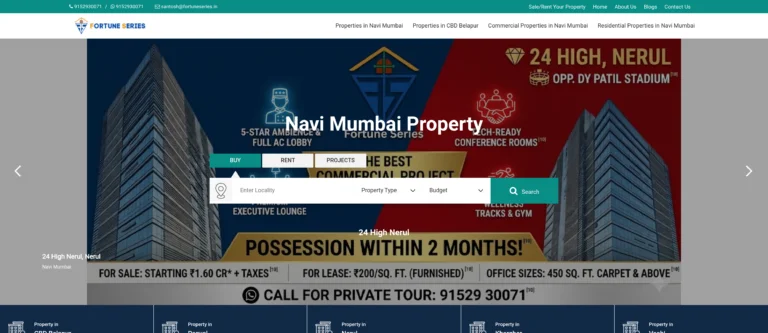 Fortune Series – Website
 Pronoesis – Website
 Texas Spine and Pain – Website
 Mindvein – Website
 Mario Products – Website
 Spectrum Filtration – Website
 IAA India Chapter – Website
 The Premium Basket – Website
 Lamar World – Website
 Spring Galaxy – Website
 Excel Wallpapers – Website
 Siddha Group – Website
Related work from our portfolio: