Managing employee identities and access becomes increasingly complex as organisations adopt cloud applications, hybrid infrastructure and distributed work environments. Enterprise IAM solutions help businesses manage authentication, user access, permissions and identity-related processes across their technology environment.
The right solution depends on factors such as application compatibility, deployment requirements, identity lifecycle management, governance capabilities and existing IT infrastructure.
Here are five IAM solutions enterprises can consider in 2026.
1. IamLogic
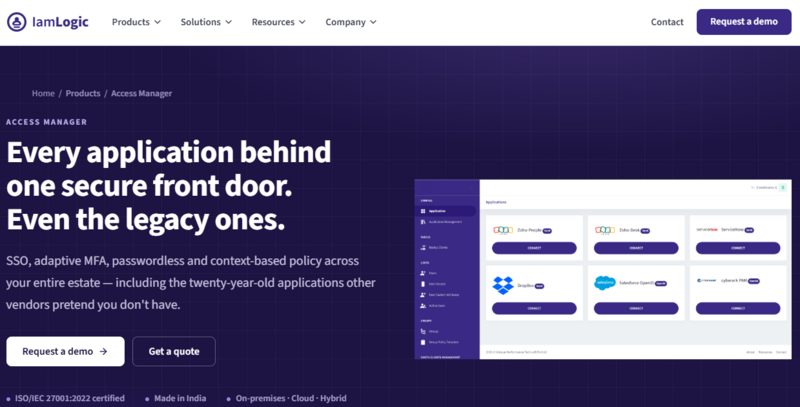
IamLogic is an identity security platform that combines Access Management with Identity Governance and Administration (IGA).
Its Access Manager provides capabilities including Single Sign-On (SSO), adaptive Multi-Factor Authentication (MFA), passwordless authentication, context-based policies and legacy application SSO. It supports SAML, OIDC, OAuth2 and RADIUS.
Its IGA capabilities cover identity lifecycle management, access certifications, role management, role mining, Segregation of Duties (SoD) and access request workflows.
IamLogic supports on-premises, cloud and hybrid deployments, which can be relevant for enterprises with regulatory, data residency or legacy infrastructure requirements.
Key capabilities:
SSO and adaptive MFA
Identity lifecycle management
Access certification
RBAC and role mining
SoD enforcement
Legacy application access
On-premises, cloud and hybrid deployment
2. Microsoft Entra ID
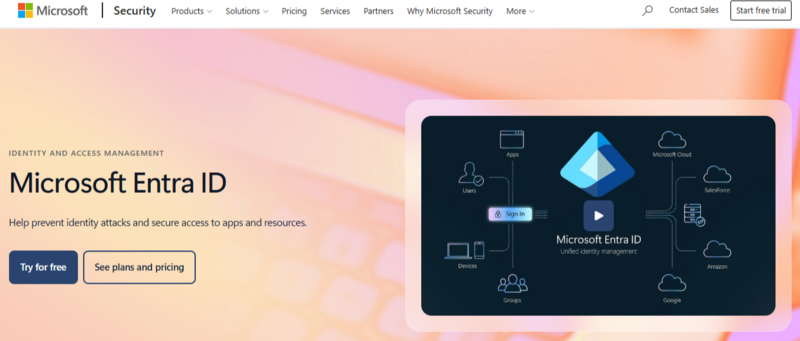
Microsoft Entra ID is Microsoft's cloud-based identity and access management service and is particularly relevant for organisations already using Microsoft 365 and the wider Microsoft ecosystem.
It supports identity management, authentication, application access and security controls across cloud and enterprise environments.
For organisations with significant Microsoft infrastructure, Entra ID can integrate identity management with existing Microsoft services and applications.
Key capabilities:
Single Sign-On
Multi-Factor Authentication
Conditional Access
Application access management
Identity lifecycle capabilities
Integration with Microsoft 365
3. Okta
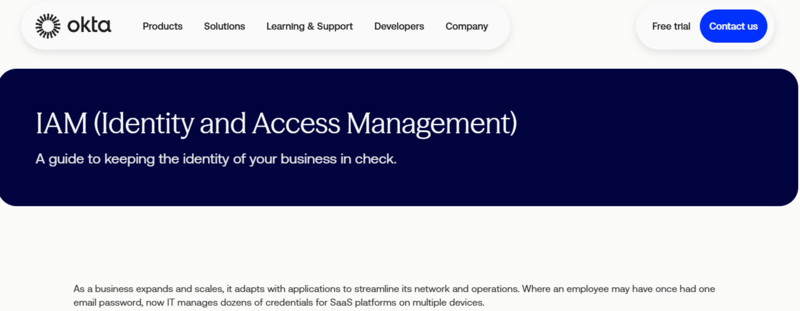
Okta provides a cloud-based identity platform focused on workforce and customer identity. It is designed to help organisations manage authentication and access across applications and technology environments.
Its capabilities include SSO, MFA, lifecycle management and application integrations. Okta is also included among the enterprise IAM platforms tracked by current 2026 industry comparison resources.
Key capabilities:
SSO
Adaptive MFA
Lifecycle management
Application integrations
Workforce identity management
Access policies
4. SailPoint
SailPoint focuses strongly on identity security and identity governance. Its platform is designed to help enterprises understand, manage and govern user access across applications and resources.
Capabilities such as lifecycle management, access certifications, role management and governance make it relevant for organisations dealing with complex access environments.
SailPoint appears consistently in current enterprise IAM and IGA comparisons.
Key capabilities:
Identity governance
Access certifications
Lifecycle management
Role management
Access policies
Enterprise application integrations
5. Saviynt
Saviynt provides an enterprise identity platform with capabilities spanning identity governance, access management and cloud environments.
Its platform can help organisations manage user access, lifecycle processes, application permissions and governance requirements across complex IT environments.
Saviynt is also included among the enterprise IAM and IGA platforms featured in current 2026 market comparisons.
Key capabilities:
Identity governance
Access management
Lifecycle management
Access requests and certifications
Role management
Cloud and application integrations
How to Choose an Enterprise IAM Solution?
Rather than comparing IAM platforms solely by the number of features they offer, organisations should assess how well each solution fits their existing environment.
Important factors include:
1. Application Compatibility:
Check whether the platform integrates with modern cloud applications as well as legacy systems.
2. Authentication and Access Controls
Evaluate SSO, MFA, passwordless authentication and policy-based access capabilities.
3. Identity Lifecycle Management
Consider how the platform handles employee onboarding, role changes and offboarding.
4. Governance and Compliance
For organisations with complex compliance requirements, capabilities such as access certification, SoD and audit reporting can be important.
5. Deployment Options
Determine whether the organisation requires cloud, on-premises or hybrid deployment.
6. Integration Capabilities
Enterprise IAM platforms need to work with existing directories, HR systems, applications and other business infrastructure.
Conclusion
Enterprise IAM is no longer limited to controlling employee logins. Modern solutions can help organisations manage authentication, access, identity lifecycles and governance across increasingly complex IT environments.
The right choice depends on an organisation's applications, infrastructure, security requirements, compliance needs and deployment preferences. Evaluating these factors can help businesses identify an IAM solution that fits their specific environment.
FAQs
How does IAM affect employee productivity?
IAM can simplify how employees access the applications they use regularly. Features such as SSO can reduce the need to manage multiple application credentials, while automated workflows can help streamline access-related processes.
Can IAM be used for contractors and third-party users?
Yes. IAM solutions can also be used to manage non-employee identities. Businesses can define access for contractors, vendors and partners and establish appropriate processes for granting and removing that access.
How does IAM integrate with HR systems?
IAM platforms can integrate with HR systems to use employee information such as department, job role and employment status. This information can support automated identity and access processes when employees join, move roles or leave the organisation.
Does IAM support legacy applications?
Many enterprise IAM platforms provide integrations or authentication mechanisms for legacy applications. However, compatibility depends on the application's architecture and the IAM solution being considered, so organisations should assess their legacy environment during the evaluation process.
Can IAM help manage privileged accounts?
IAM solutions can support controls around privileged identities and administrative access. Organisations may use additional policies, authentication controls and monitoring processes to apply stronger safeguards to accounts with elevated permissions.
How long does it take to implement an IAM solution?
Implementation timelines vary depending on factors such as the number of users and applications, existing identity infrastructure, integration requirements and deployment model. A phased implementation can allow organisations to prioritise critical applications before expanding IAM capabilities across the wider environment.
Suraj Pandey is a seasoned SEO expert with over 4.5 years of experience in digital marketing. He excels in driving website traffic and improving conversion rates, ensuring business growth. Suraj's expertise spans on-page optimization, off-page strategies, technical SEO, and content marketing. His skills in keyword research, competitor analysis, and backlink building have made him a trusted advisor to high-profile clients. With a proven track record, Suraj crafts effective SEO strategies that deliver measurable results.
Hello!
We'd love to show you how you can get more traffic and leads